The Global Design Cities Initiative (GDCI) is thrilled to announce that Rio de Janeiro, Brazil and Cuenca, Ecuador have been selected to receive technical support from GDCI’s Streets for Kids program based on their impressive street transformations already completed, and their bold proposals to scale up efforts to make school surroundings safer and more healthy for children. Rio and Cuenca’s early implementations in response to grassroots requests for changes to streets around schools in low-income neighborhoods played a key role in their selection. Both cities’ focus on child-influenced redesigns was also a deciding factor. Empowering children to be safe mobility ambassadors will likely make an enduring impact on the places and ways people of all ages move, play and gather in both cities for years to come.
“Rio de Janeiro and Cuenca are very different cities, yet they share a deep commitment to improving the lives of their children by starting with something as fundamental as safe access to school—particularly in low-income neighborhoods. By engaging young people as both designers and stewards of the streets around schools, these cities are laying the foundation for a future that is safer, healthier, more connected, and more joyful. We are excited to work with them again to build on their impressive progress.”
Skye Duncan
Executive Director, GDCI
The final selection of Rio and Cuenca grew from, in part, earlier cohort-based guidance provided by GDCI over several phases in which both cities participated. Both were selected then due to their impressive accomplishments, built on global best practices, and the potential to grow their impact and inspire other cities. Now, GDCI will provide both cities with year-long stakeholder and community engagement guidance, technical design recommendations for streetscape changes, data collection and evaluation support plus a grant to help roll out the changes. The technical assistance provided aims to help each city improve, institutionalize and expand existing street design processes, projects and programs so that they prioritize children’s needs and scale up their impact.
Rio de Janeiro: Making prior streetscape changes permanent
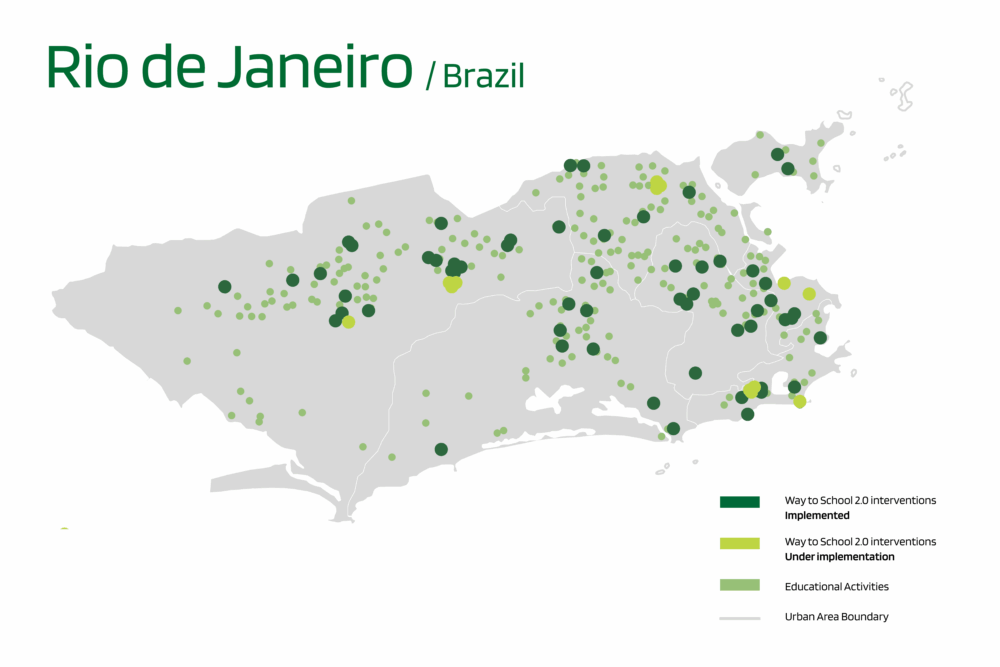
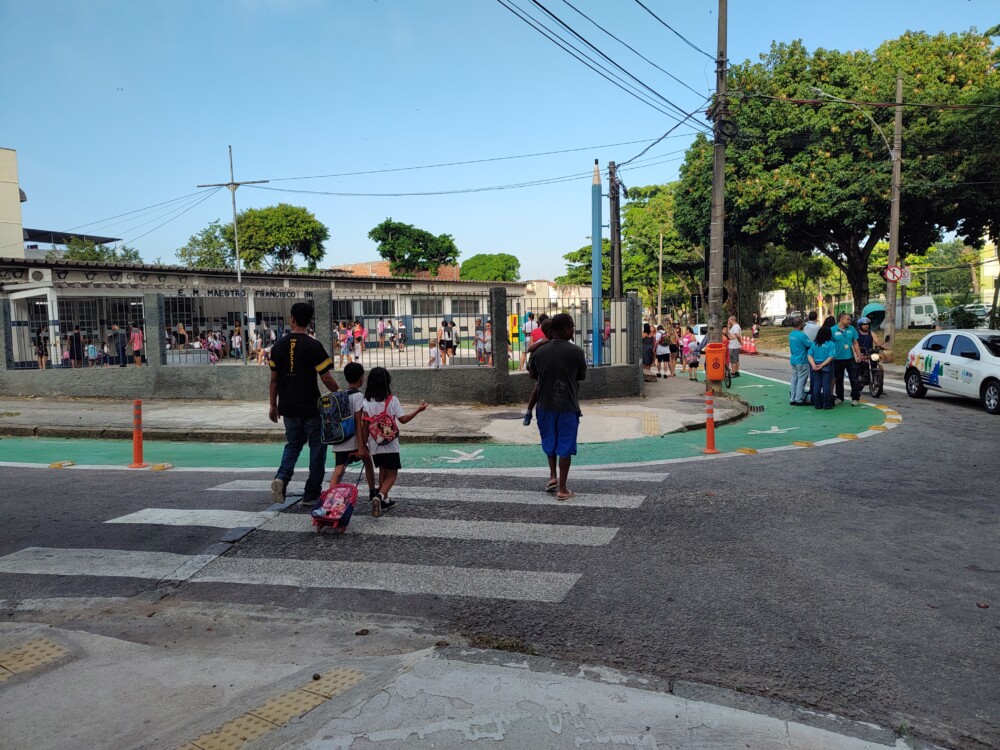
In Rio, the city team’s future technical assistance focus is on making permanent some highly successful pilots of the past. Rio’s nearly half (47%) of public school children walking to school makes them vulnerable to vehicles traveling at high speeds, particularly in low-income neighborhoods with scant pedestrian infrastructure. As a result, the city in 2022 launched its ambitious ‘On the way to school 2.0’ program, carried out by Rio’s traffic agency, CET-Rio. The program brings together principals, teachers, students and planners to create safer routes to school.
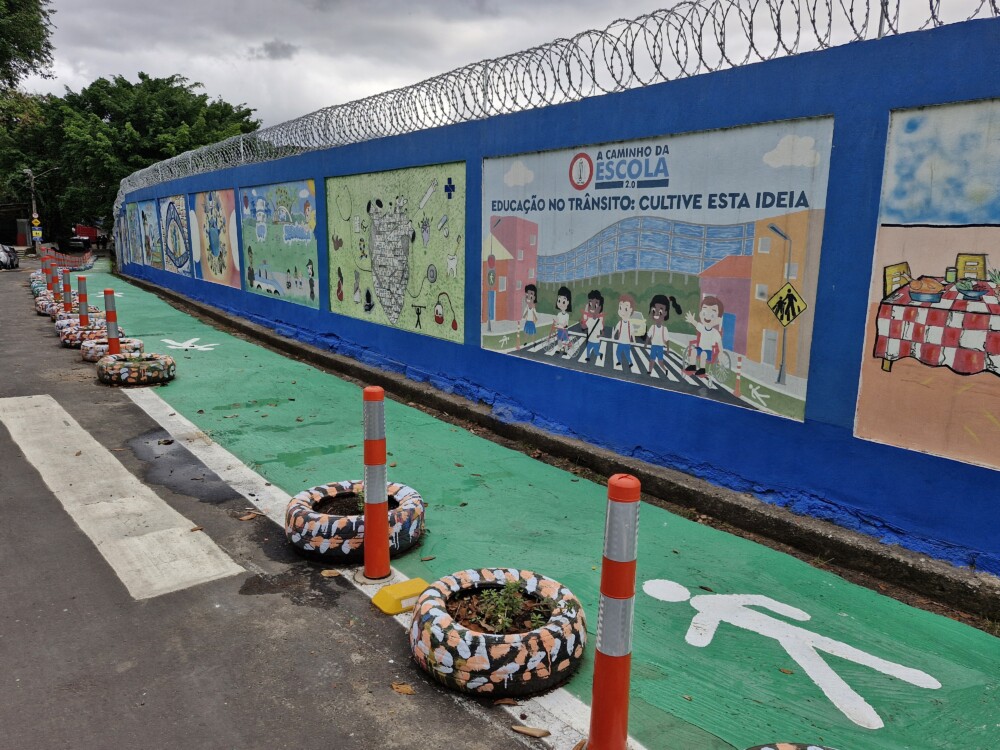
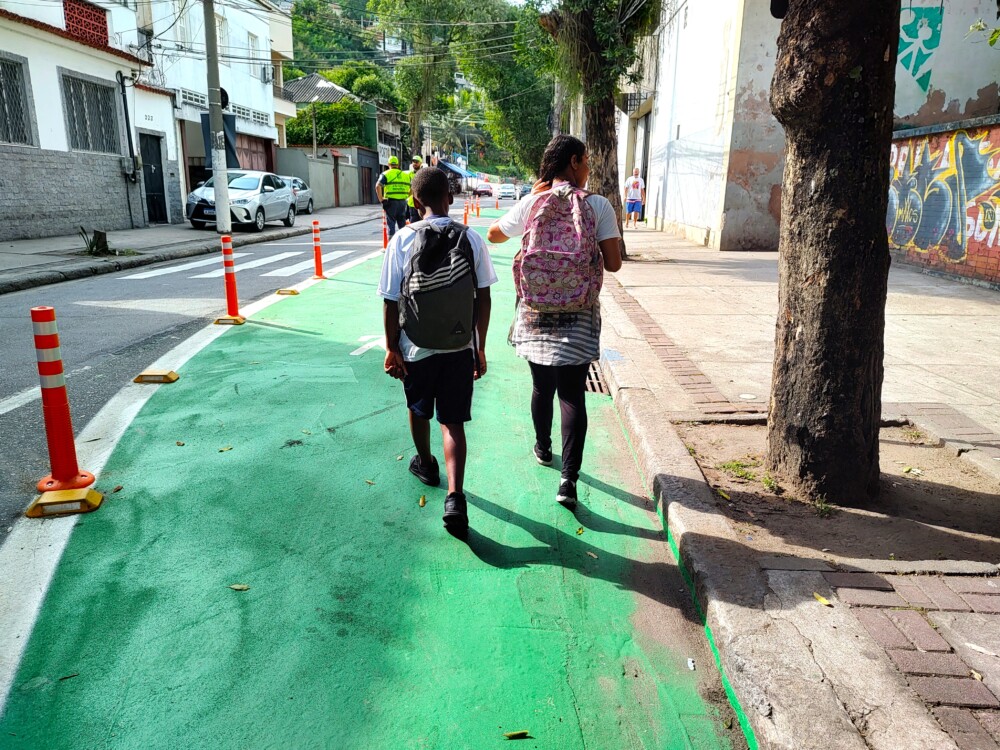
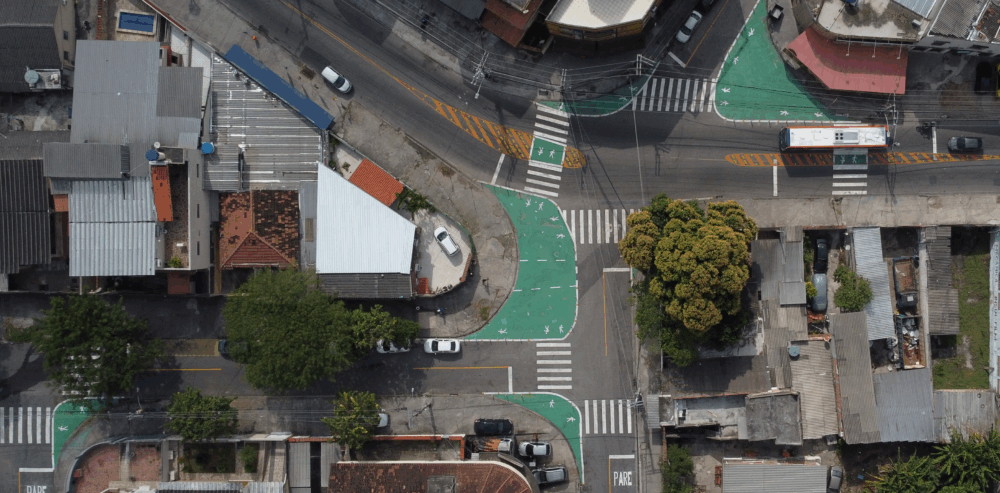
To date, the program has implemented urban transformations in over 58 school surroundings, improving access to school for over 25,000 school children. In parallel, students learned about road safety and street stewardship, and the city implemented interim street transformations using paint and temporary materials to extend sidewalks and add pedestrian crossings. This approach allowed the city to test and evaluate any changes, and for communities to understand and give feedback before committing to long-term projects. Watch Rio’s team lead talk about the program in a Streets for Kids webinar series session: Starting with Streets near schools.
With GDCI’s technical assistance, Rio plans to develop a process to make many of these proven changes permanent in the coming years, with additional elements shared with and embraced by the communities they will involve in this process. Likely additions include street furniture and green infrastructure to make select city streets around schools more safe, healthy and joyful.
“The On the Way to School 2.0 Program is an example of how public spaces can be transformed into a catalyst for good road safety practices. The active participation of the school community in identifying risks and developing solutions creates a sense of belonging that goes beyond road interventions. By redesigning streets around schools, we promote greater safety, encourage active modes of travel, and demonstrate that urban planning, when done collaboratively, can save lives and improve the city for everyone.”
André Drummond
Technical Director, CET-Rio
Cuenca: Evaluating projects to improve and expand street changes around schools
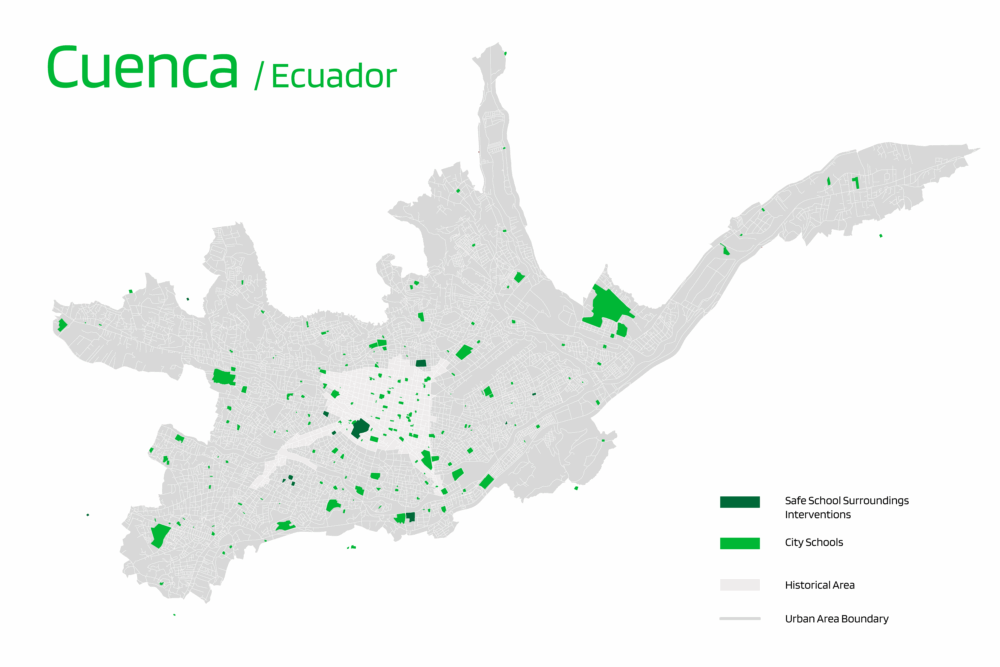
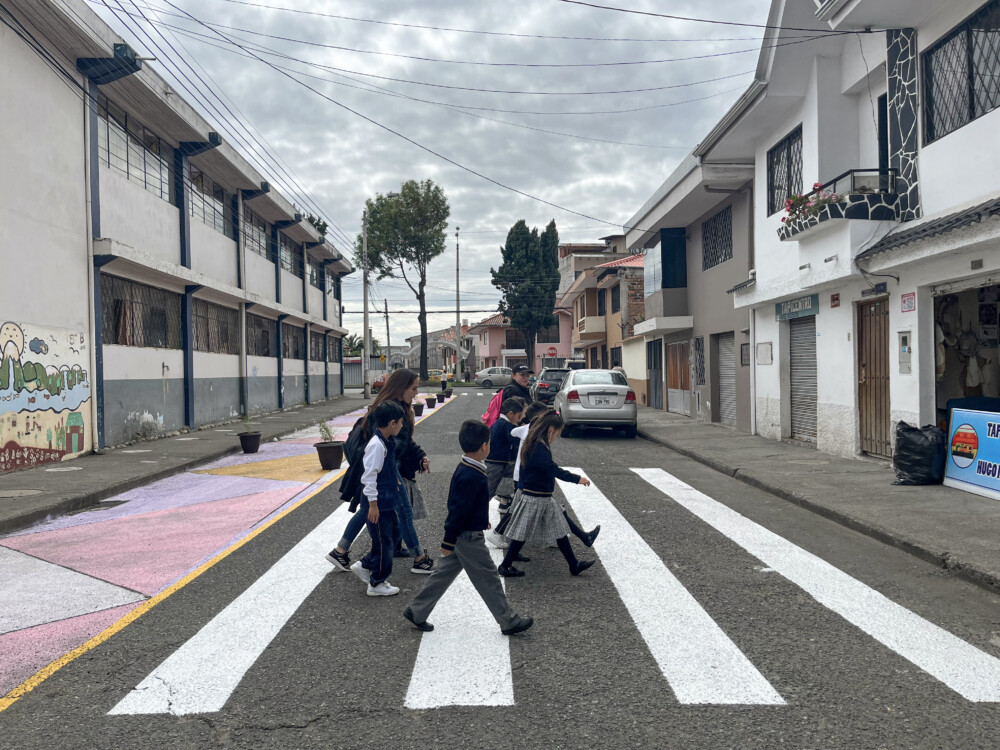
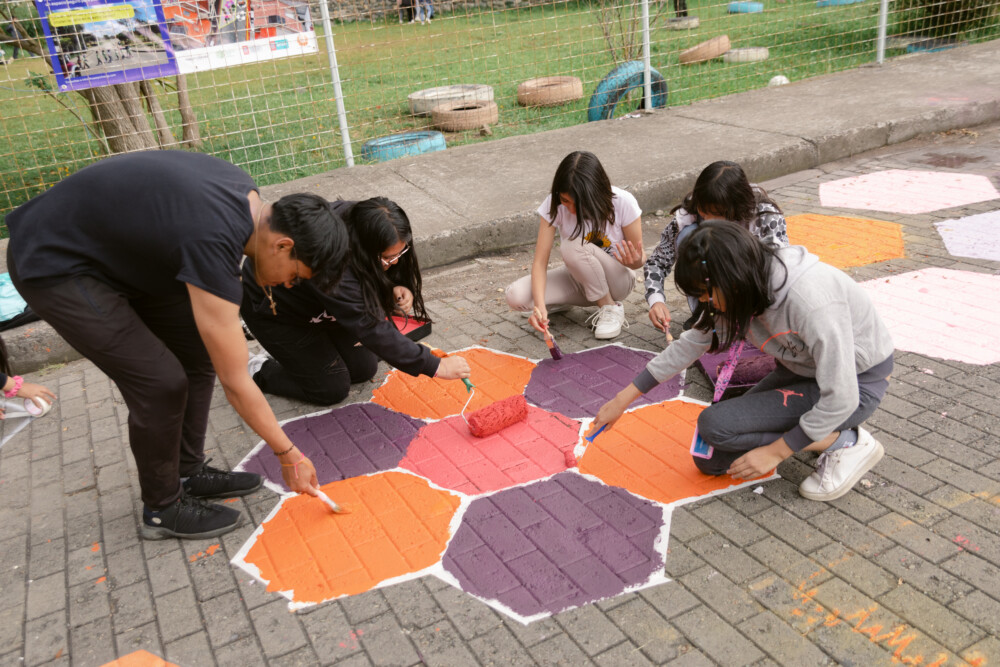
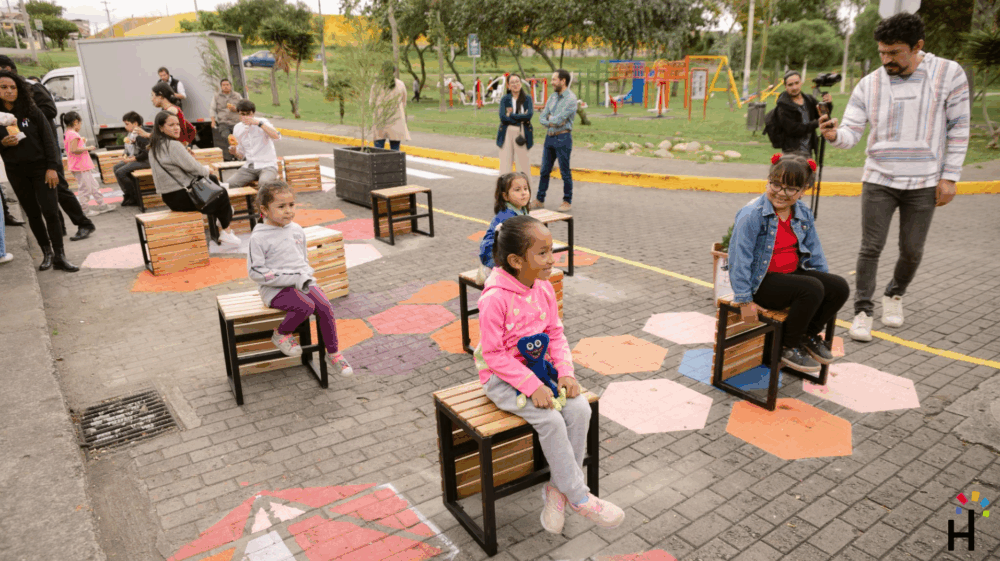
Cuenca has a similar program called ‘Safe School Surroundings’. In its initial implementation, children learned about and officials were trained on inclusive and safe streets and mobility. Next, the city redesigned a street connecting a primary school and nearby park, involving more than 60 children, the school and the local community. As a result traffic speeds fell by 36% and the number of pedestrians rose by 118% on the street.
Cuenca has since rolled out eleven more street transformations in schools across the city, benefiting more than 8,700 children and their caregivers. The interventions have also reclaimed over 1,700 square meters for pedestrians and led to a 70% reduction in motor vehicle speeds. In parallel, the General Directorate of Mobility Management of Cuenca (DGM) and the Mobility, Transit and Transportation Public Company (EMOV EP) have built on these successes by committing to maintenance of the pilot project and school surroundings; and three Universities in Cuenca have also collaborated on new street projects for children and youth.
Based on these experiences, the city of Cuenca plans to forge a sustained route to additional projects by expanding support and broadening stakeholder engagement through a refined evaluation framework. With GDCI’s technical assistance, Cuenca will create a methodology to evaluate its street transformations near schools with a focus on clean air, and ample space (particularly green) for safety, playing and enjoyment. The team will work on these evaluations with students and school staff, for future project improvements and more stakeholder engagement for a wider, more enduring, and longer-term impact.
“This technical assistance from GDCI will strengthen the methodology we currently use to implement safe school environments in the city, incorporating a participatory design approach, as well as a monitoring and evaluation strategy that ensures sustainability and replicability. This strategy also aims to promote the development of public policies that benefit the most vulnerable users.”
Pablo Andrés Carvallo Corral
Director, Cuenca’s General Directorate of Mobility Management
Building on prior GDCI guidance
Cuenca first collaborated with GDCI in 2022 in GDCI’s first Streets for Kids Leadership Accelerator. Then, Cuenca was one of 20 global cities selected among 90 applicants for online capacity building to design streets for kids. Afterwards, the Cuenca team ‘graduated’ along with nine others into a one-year technical assistance program that followed–this time with a seed grant and technical support to pilot a children-first transformation.
And in 2025 both Cuenca and Rio were selected for the second round of the Leadership Accelerator in which ten city teams from Brazil, Colombia and Ecuador were selected among 33 applicants, for two months of intensive online training that included live global experts’ lessons learned, peer-to-peer exchanges, and proposal development guidance to help participating cities scale up prior efforts. The current technical assistance both cities will receive was offered to just two of the ten participating cities.
Using this very efficient ‘funnel’ approach helps both aspiring city teams and GDCI build relationships with each other, forge ties with the cohort, learn from the experts, stress test ideas, and identify future opportunities to learn and collaborate, all in pursuit of scaling up the reach and impact of their prior Streets for Kids redesign work.
GDCI congratulates Rio and Cuenca and looks forward to helping solidify and expand their prior work for streets that are more safe, healthy and joyous for children – and everyone.
To learn about future opportunities, resources, and events from GDCI’s Streets for Kids Program, sign up for email updates. The Streets for Kids program is generously supported by the FIA Foundation and Fondation Botnar.