Transforming the streets near schools is one of the most strategic moves a city can make to design safer, healthier, and more joyful urban spaces. School surroundings are neighborhood anchors—the setting for a child’s most frequent daily journey, directly shaping their independence, well-being, and cognitive and emotional development. Through the Streets for Kids lens, children are not passive users of future cities, but active experts whose daily experiences inform how we design public space. Across the globe, momentum is building as cities transform their school environments. By starting with small-scale transformations, testing solutions to gather real-world evidence, and fostering collaborative action across municipal departments, school communities, and civil society, we can scale context-sensitive designs that put children—and ultimately entire communities—first.
Why focus on the streets near schools?
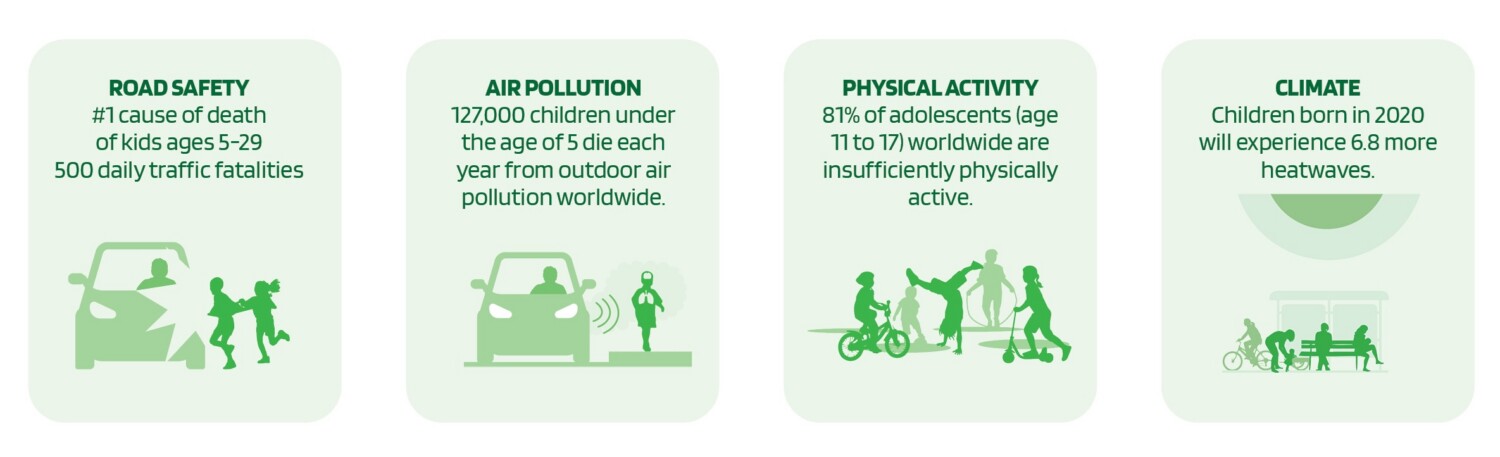
This global momentum responds to a profound crisis on city streets. Globally, traffic crashes are the leading cause of death among young people, with child pedestrian crashes occurring all too often within just 500 meters of a school. At the same time, more than 90% of the world’s children breathe toxic air every day, while hostile road design leaves 81% of youth insufficiently physically active.
Pioneering transformations prove that reallocating street space can deliver multiple benefits to children every day, from reducing harmful air pollution during peak hours to yielding dramatic reductions in child traffic injuries. Integrating these evidence-based solutions into permanent city policy is an urgent public health imperative.
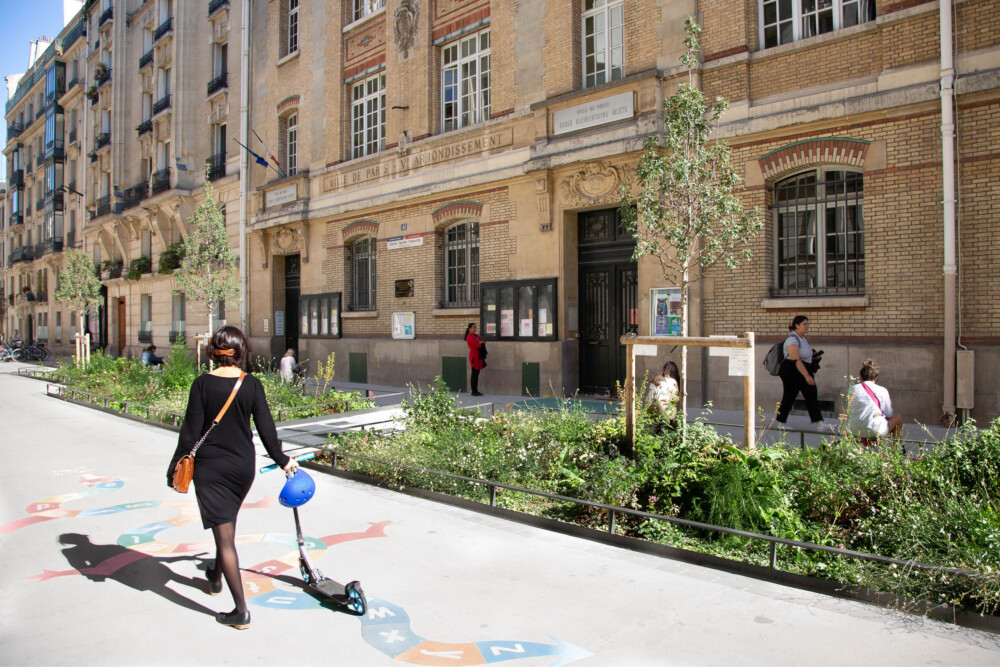
CLIMATE RESILIENCE. Paris launched its Rue aux Écoles Program in 2020. By 2026, 50% of the streets around schools and daycares had been transformed. Photo credit: Christophe Belin/Ville de Paris.
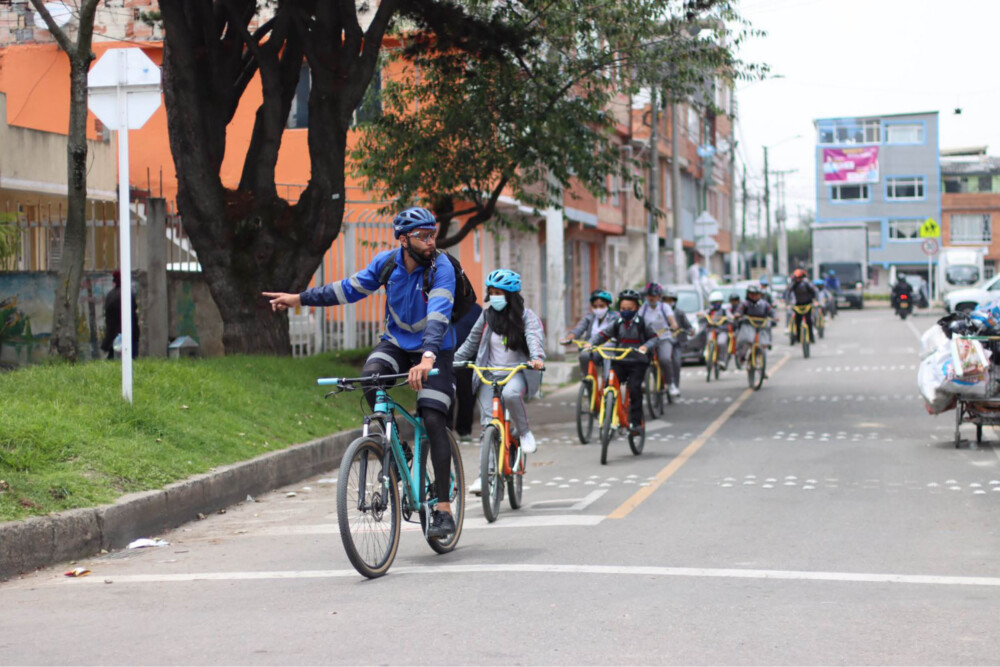
ACCESS TO SCHOOLS. Bogotá’s Kids First program was launched in 2013 to support children’s access to schools. By 2025, it supported over 1.5 million cycling and walking trips to schools.
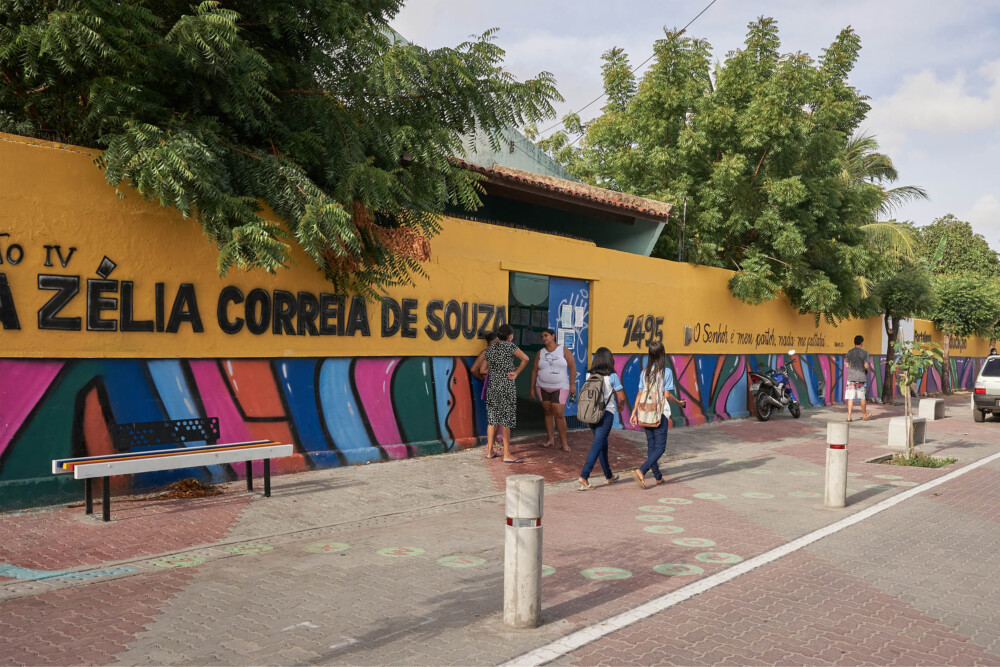
ROAD SAFETY. Fortaleza launched its Caminhos da Escola program in 2019. An initial estimate of nine projects showed 15% reduction in traffic injuries and fatalities.
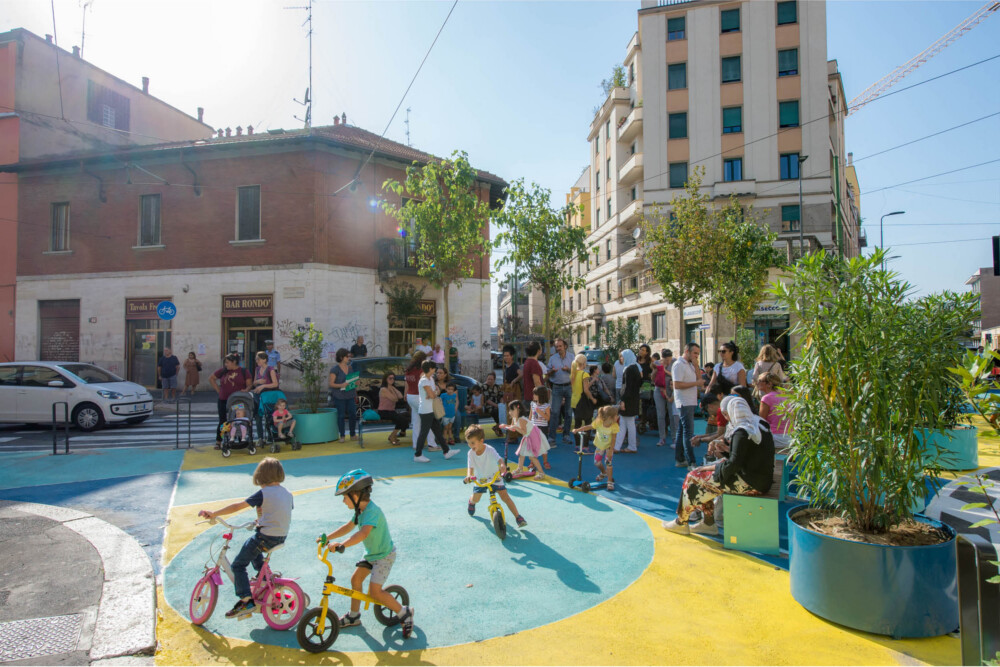
ENGAGED COMMUNITIES. Milan’s Piazze Aperte per Ogni Scuola was launched in 2018. By 2026, over 600 organizations, including 250 schools, submitted requests through its open call program.
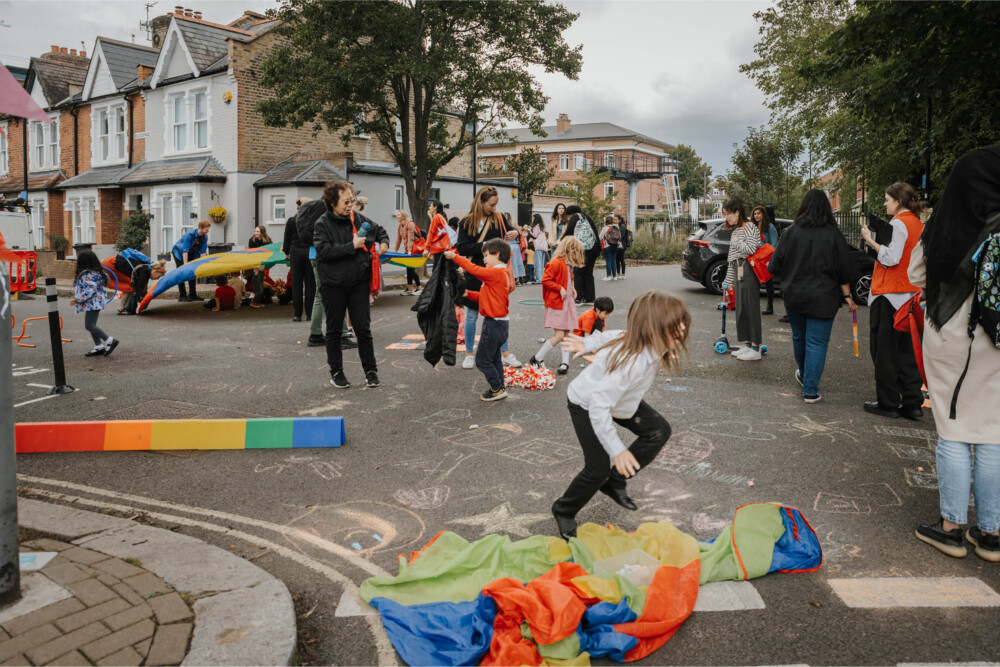
AIR QUALITY. Since launching in 2017, London’s School Streets initiative has grown to over 500 locations—cutting nearly 74,000 daily car trips and reducing peak-hour nitrogen dioxide levels by up to 23%. Photo credit: Sustrans.
Read more about the impact achieved by Streets for Kids projects in various locations in the 2025 impact summary report.
Benefiting children globally
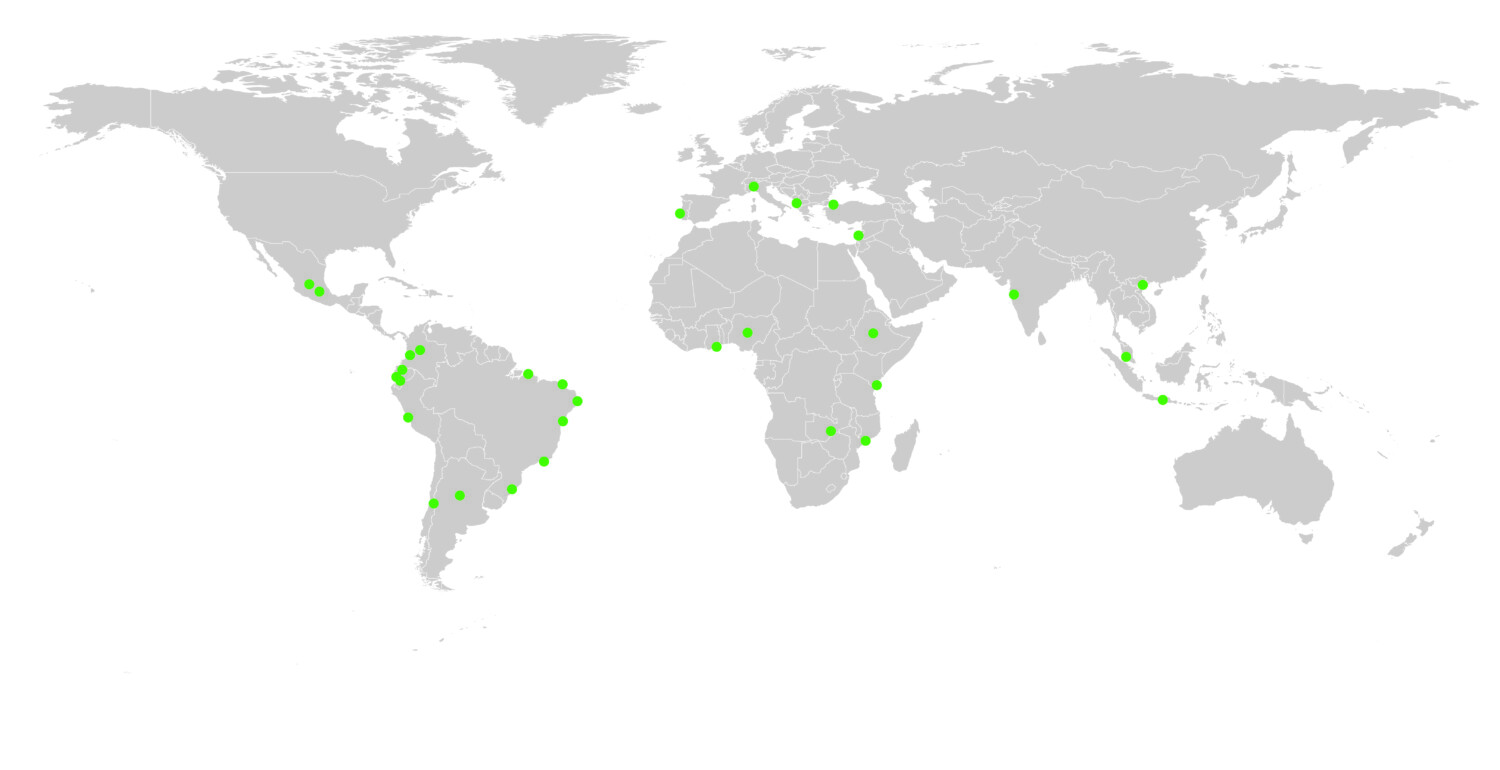
Over the past decade, GDCI has supported more than 50 projects that have transformed environments around 145+ schools across 30+ cities, directly benefiting over 147,000 students worldwide.
Over 30 cities supported by GDCI in transforming streets near schools.
How to transform streets near schools
When thoughtfully designed and shaped together with children and their communities, streets near schools can serve as natural extensions of the learning environment. They can foster community connection, encourage outdoor play and active mobility, and set a precedent for city-wide transportation shifts.
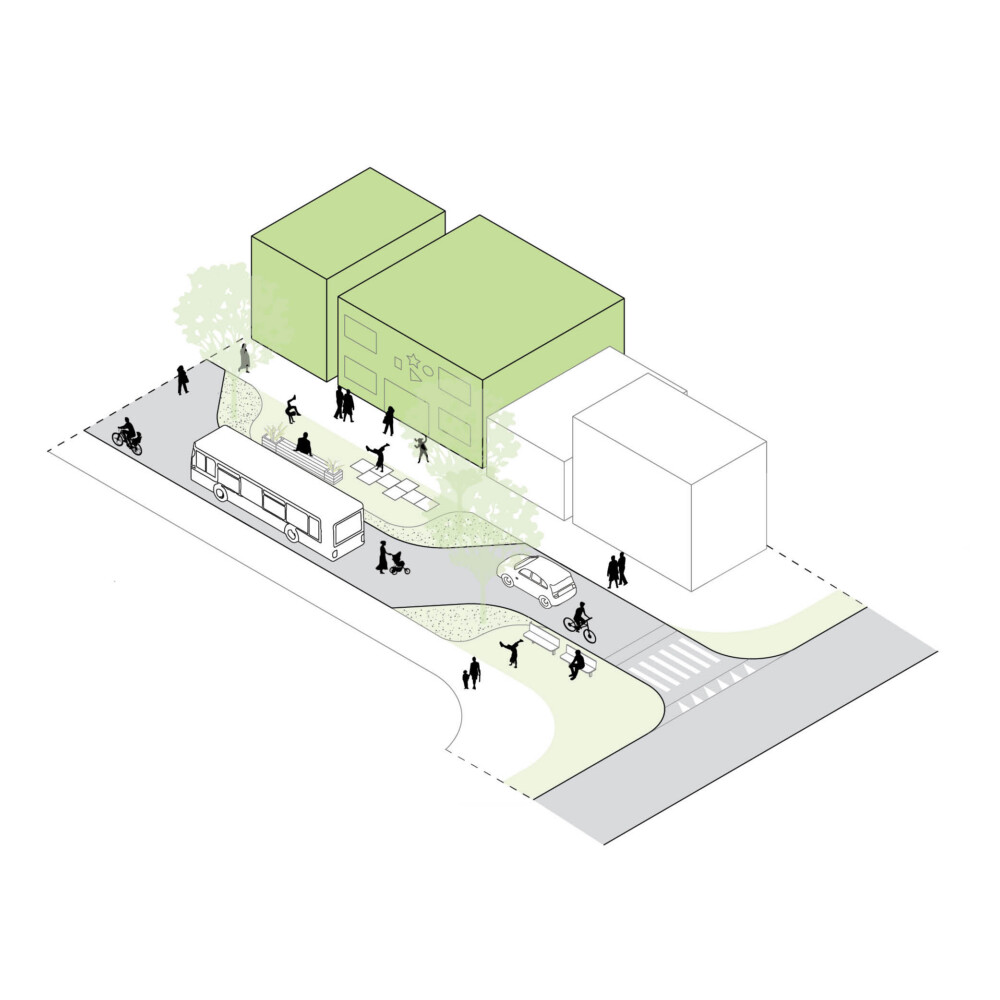
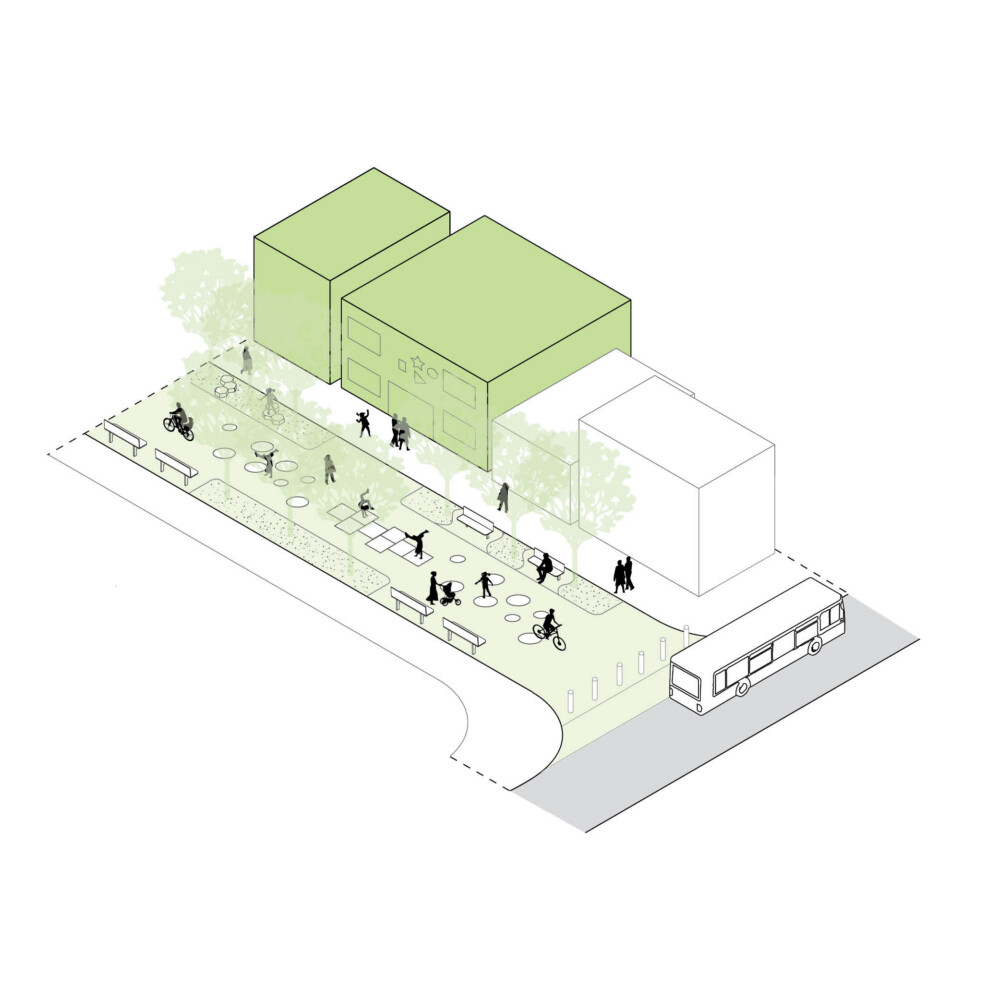
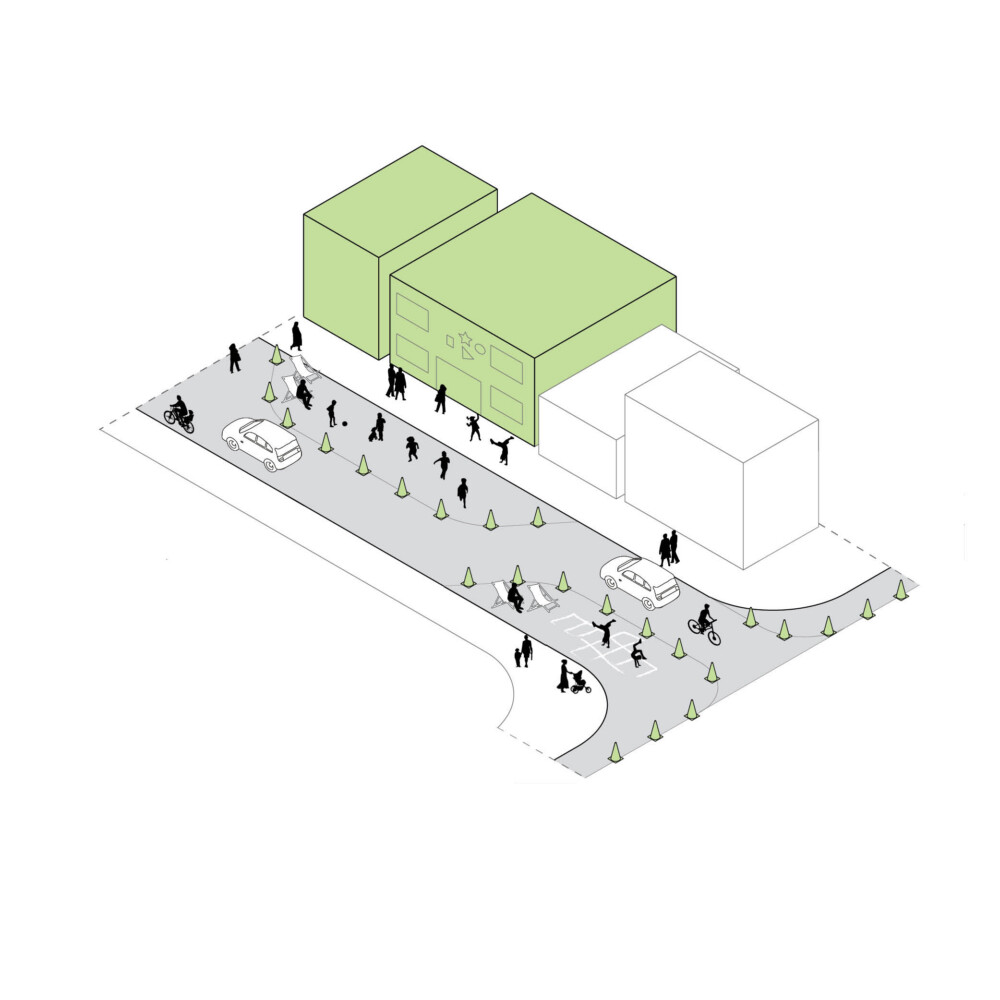
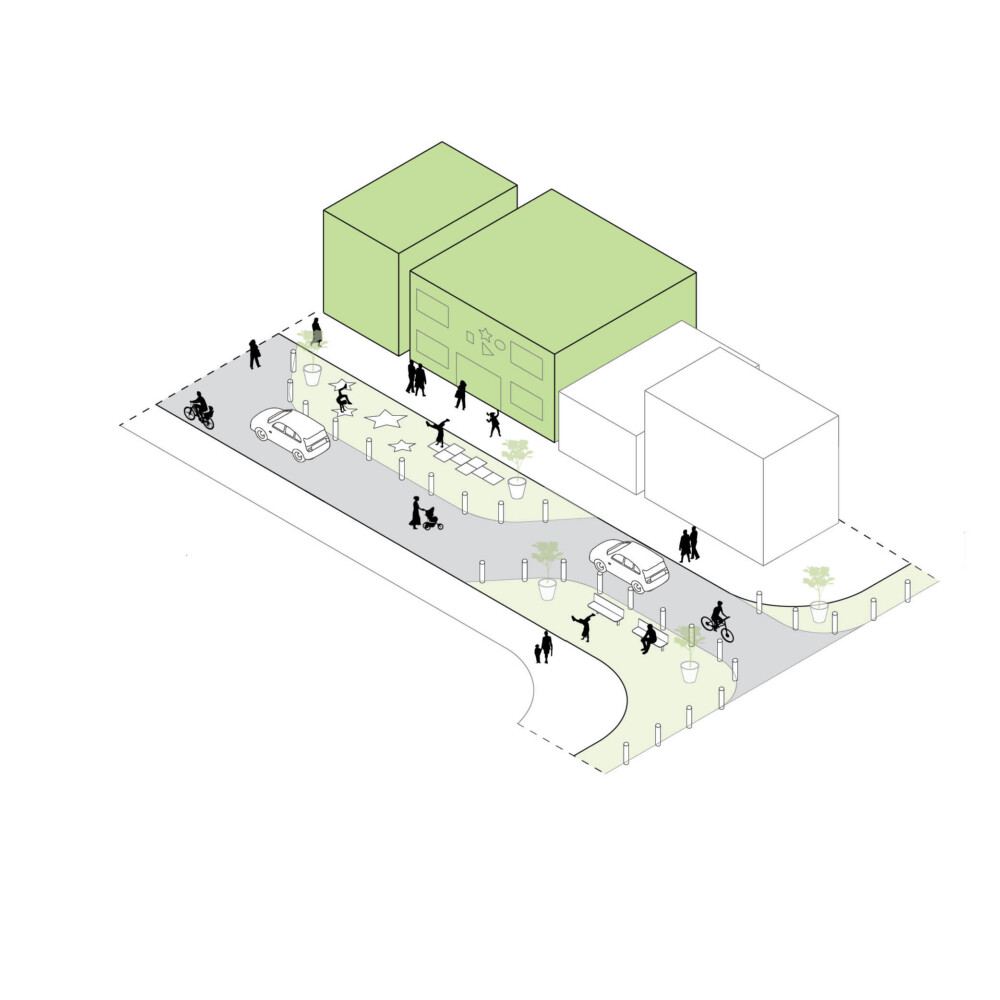
Street transformations near schools offer flexibility across scale, space redistribution, and design, duration, and permanence, enabling cities to tailor interventions to local contexts while building momentum for lasting urban change.
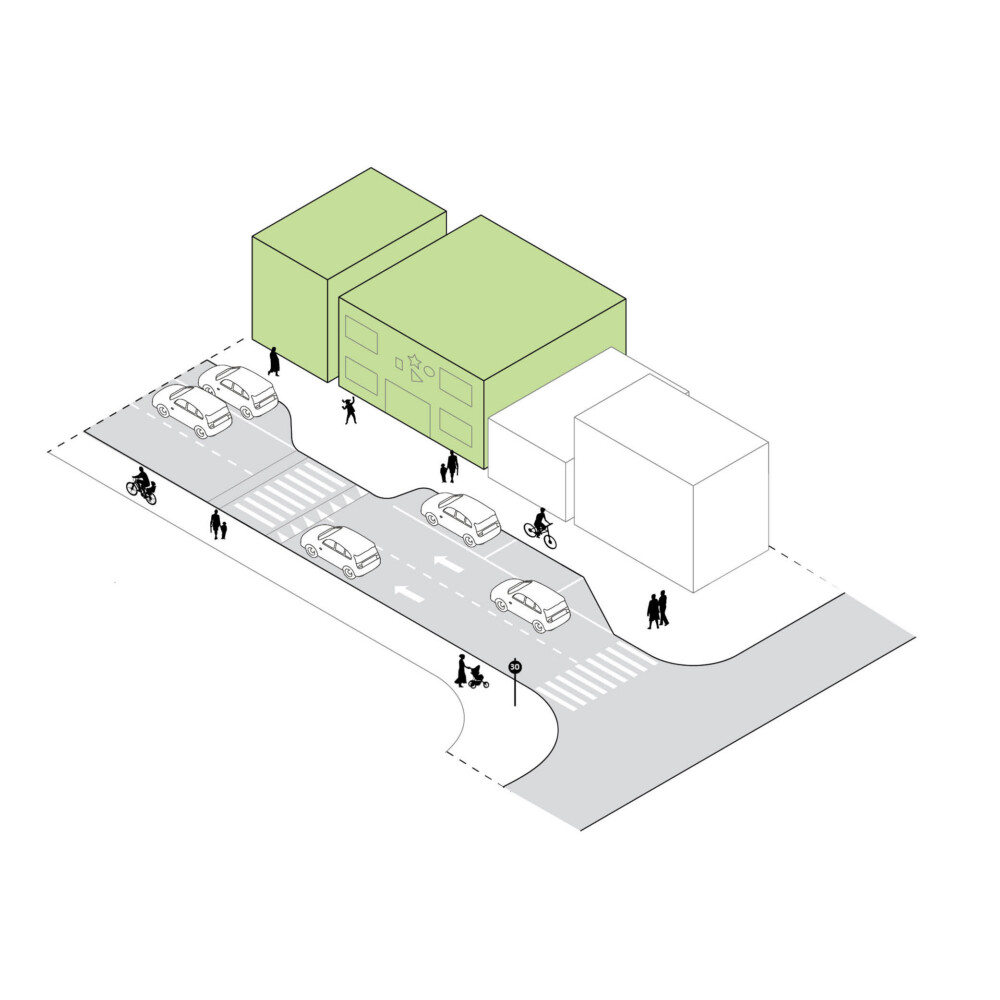
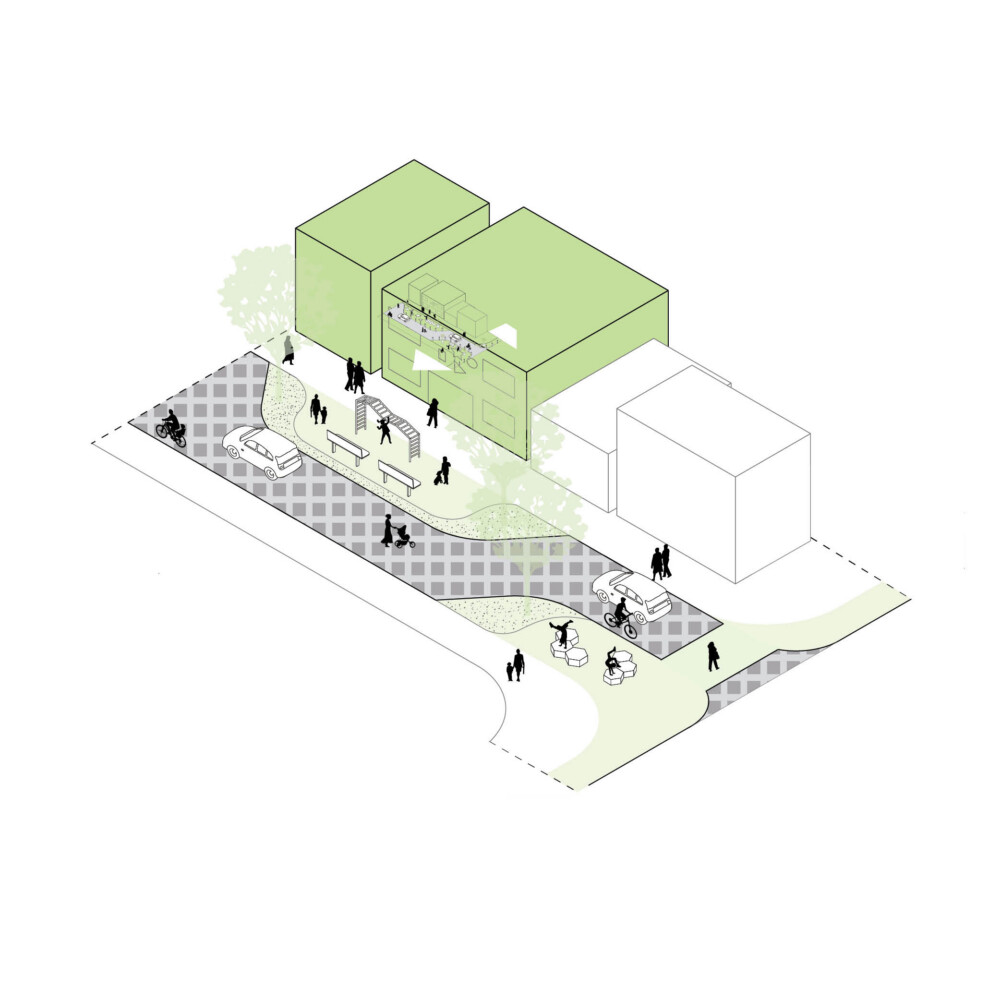
The scale of an intervention shifts its core impact. Focusing on the street in front of the school gate allows the design to support community gatherings and ease children’s access to school during peak school hours. Expanding to the neighborhood level can offer broader benefits such as protecting safe routes for walking or cycling to school and reducing traffic-related air pollution.
Streets in front of schools
Streets in front of and adjacent to schools
Multiple streets in a neighborhood
Varying degrees of space redistribution and design allow cities to apply design strategies that balance the vision with site constraints. Designing for safe speeds, reclaiming space for pedestrians and cyclists, and creating inviting spaces to pause and stay are some of the design strategies that can transform the street into a safer, healthier, and more joyful school environment.
Low space redistribution and design
Medium space redistribution and design
High space redistribution and design
Transforming the street through different durations drives engagement and sustainability. Temporary events during peak school hours or the school day and on weekends help introduce fresh ideas, demonstrate what is possible, practice new mobility habits, and inspire community enthusiasm, while transitioning toward permanence allows cities to solidify long-term political and community commitment.
School start and end times
School hours or weekends
Every day
Cities can adapt the permanence of their transformations. Low-cost, modular equipment provides an accessible way to pilot designs quickly and showcase immediate possibilities. Moving to interim materials allows cities to test interventions over longer periods, gather real-world data, evaluate functionality, and address community feedback. Transitioning to permanent materials represents a lasting commitment and enables cities to integrate robust road safety and accessibility features, introduce landscaping, and embed climate resilience infrastructure directly into the streetscape.
Through guides, handbooks, and capacity-building opportunities, GDCI offers guidance on designing and implementing street transformations near schools and supports regional programs across Brazil and the Turkish Marmara Region. To help cities get started, GDCI’s Streets for Kids webinar, “Starting with streets near schools,” is available in English, Portuguese, and Spanish.
From theory to practice
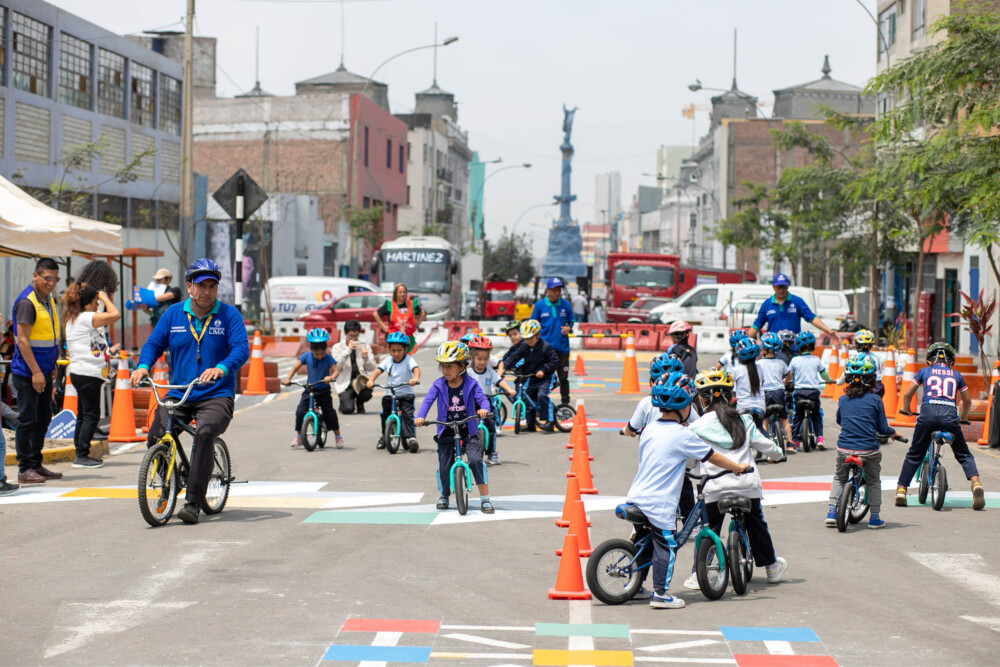
Time-restricted and temporary events
The term “school streets” often refers to the common practice of temporarily closing a street near a school to through traffic during school start and end times. This practice can promote school community engagement with the topic, encourage supervised walking and cycling initiatives, provide an opportunity for households to experience walking or cycling to school, and promote community-led advocacy for broader, child-focused street design shifts in the city. As part of street transformations around schools, pop-up and temporary events are effective tools for demonstrating the potential of the school’s surroundings. Pop-up events can be an opportunity to showcase kids playing and connecting with their community, exchange ideas with caregivers and community members, and celebrate urban childhood.
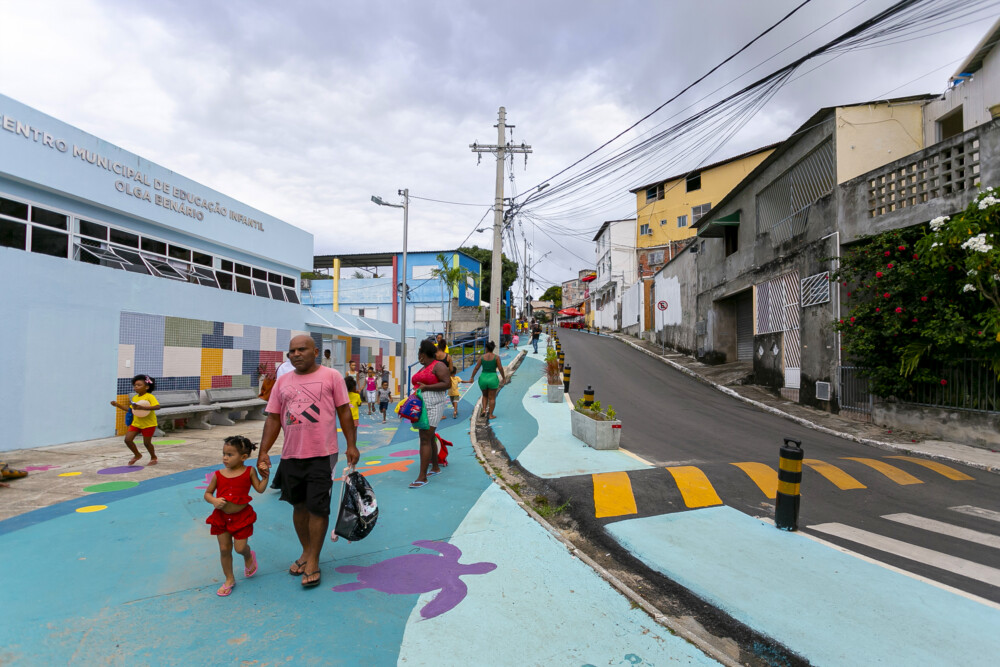
Tactical and interim transformations
Interim materials—such as paint, planters, and temporary signage—provide a toolkit for piloting School Streets, offering immediate safety benefits while generating the momentum needed for long-term change. By deploying low-cost, adaptable elements around school gates, cities can quickly create protected spaces for children and families to gather and play, reducing motor vehicle speeds and encouraging walking or cycling. Over the course of a pilot lasting weeks or months, these materials allow municipalities to collect critical data, monitor peak school-hour dynamics, and gather firsthand feedback from parents, teachers, and local residents. This iterative approach refines the design in real time, building strong community trust and establishing a clear, evidence-based foundation before committing capital resources to permanent infrastructure.
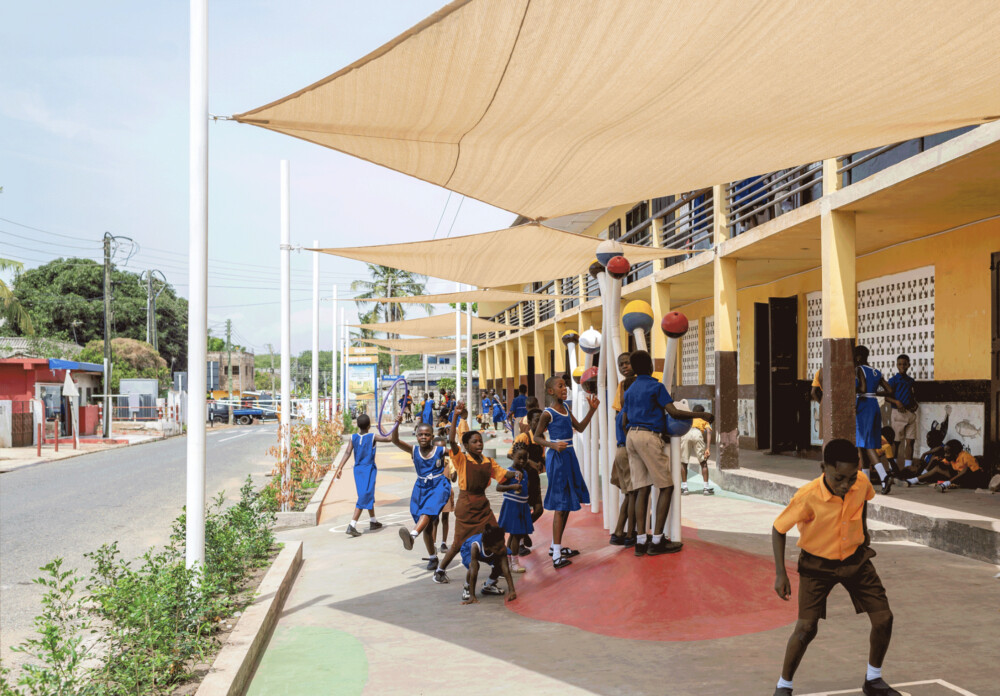
Capital and long-term changes
Temporary and tactical interventions provide immediate, tangible proof of concept for street redesigns, allowing communities to experience and refine proposed changes in real time. However, interim materials have clear operational limits— elements like continuous pedestrian ramps, drainage, and landscaping require capital construction to achieve true durability and accessibility. Transitioning these successes into permanent capital projects secures long-term maintenance budgets and establishes new design standards that can scale high-quality infrastructure across the entire street network.
Supporting programs and policies
Transforming streets around schools can go far beyond temporary events and one-off projects. GDCI is proud to support cities such as Milan, Rio de Janeiro, and Cuenca, Ecuador, as they institutionalize best practices, dedicate capital budgets, and transition from quick-build interventions to long-term construction. By refining their design, engagement, and evaluation processes, cities can successfully replicate success and increase local support. As this momentum grows, we remain committed to measuring and sharing the impact safer, healthier, and more joyful streets near schools have on children and their communities to turn these transformations from best practices into standard practice around the world.
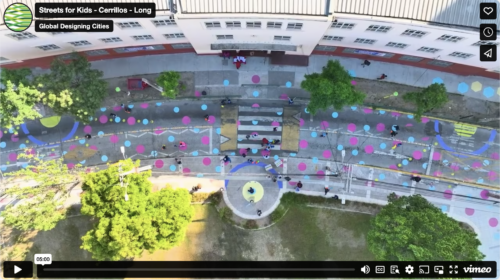
Buzeta ‘Caminable’ – Opening Streets for Play and Physical Activity in Cerrillos, Chile
Ciudad Emergente partnered with the Municipality of Cerrillos and the Mayor University to do a pop-up transformation of 7th Avenue into a pedestrian-friendly space, connecting an elementary school serving 350 children with a nearby park, and creating a safer and more playful space.
The Municipality of León, Mexico, partnered with the Governmental Family Services Agency (DIF) and the non-profit Colectivo Tomate to pilot an interim street transformation creating a safe, accessible, and playful path to key destinations serving nearly 1,000 children daily.
Surakarta Child-friendly and Inclusive City (SUKARIA)
In Solo, Indonesia, the non-profit Kota Kita partnered with the Surakarta City Department of Transportation to redesign two streets near a high school, benefiting more than 500 students and residents. More than 400 kids, caregivers, and community members participated. The interim transformation created a safer, more attractive, and more inclusive environment for children by reclaiming public space for pedestrians and introducing traffic-calming elements and street art.