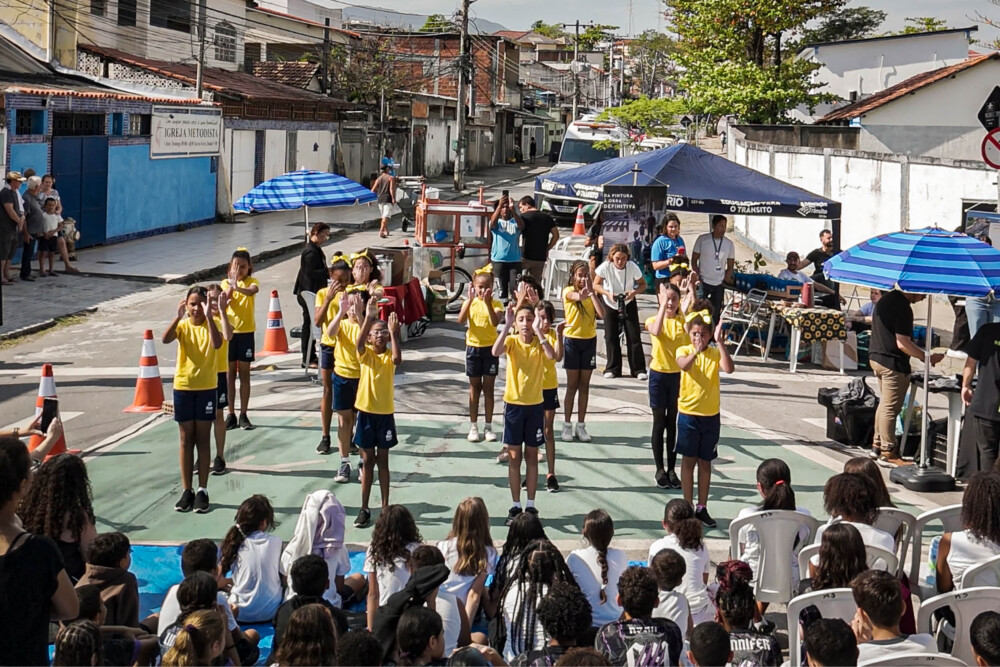
School Street Programs at Scale: The Journeys of Rio de Janeiro and Cuenca
Following their participation in the 2025 Streets for Kids Leadership Accelerator, GDCI selected Rio de Janeiro, Brazil, and Cuenca, Ecuador, to receive dedicated technical assistance. Over the course of a year, GDCI worked alongside local teams to refine, strengthen, and scale the impact of their school streets initiatives. Here is a look back at the journey and key takeaways from this process.
As we approach the 2018 Road Safety Week in Mumbai, India, we decided to revisit GDCI's collaboration with MCGM and MTP from last year, where a week-long trial and Mithchowki in Malad, was conducted to reclaim ~1650 sq.m of underutilized roadbed on the street for pedestrians and support a space that is more legible for all users.
Streets for Kids – Expression of Interest for Contributors Network
Our network of global experts made invaluable contributions to the Global Street Design Guide (GSDG), and we are now looking to establish an expert-network to support the production of the Streets For Kids GSDG supplement.
From Pop-Up to Permanent: Five lessons in tactical urbanism
Urban residents have long practiced a form of tactical urbanism: repurposing underutilized places using temporary materials and transforming them into more dynamic public spaces.
People, Participation, and Pop-ups: Lessons in Tactical Urbanism in São Paulo, Brazil
Interim interventions can bring people together to reimagine their streets. When done right, tactical urbanism is a powerful tool to show what’s possible and test design strategies to make streets safer for everyone. That’s exactly what the City of São Paulo and partner organizations accomplished in the neighborhood zone of Santana.
Cidade da Gente: Fortaleza redesenhando ruas para as pessoas
Quando técnicos da Prefeitura de Fortaleza apresentaram pela primeira vez a proposta de implantação de uma Área de Trânsito Calmo no bairro de Cidade 2000, os moradores receberam a ideia com cautela.
Reshape Streets, Reconnect Communities: Reclaiming Streets in Fortaleza, Brazil
In the new square, local kids have a place to play, neighbors of all ages and abilities have new benches to sit and talk, cyclists have a safer route to ride, and local businesses have new customers.
City officials have launched a number of initiatives to reduce traffic injuries and fatalities by half by 2023. One such initiative is the recently launched Safe Intersections Program (SIP) which will transform ten intersections per year over the next three years, making them safer and more efficient.
Time for action is NOW: 5 hours to Safer Streets in Sao Paulo
'It is not a question of engineering or funding but a strong will to make our streets safe that matters!' Sao Miguel, an eastern district of Sao Paulo attested to this statement by transforming an intersection that only served cars to a safe place for people in 5 hours.