Transforming the streets near schools is one of the most strategic moves a city can make to design safer, healthier, and more joyful public spaces for children and their communities. As neighborhood anchors, school environments are central to a child’s daily routine—directly shaping their cognitive and emotional development, independence, and overall well-being. With more cities adopting a child-centric approach to school environments, the recent experiences of Rio de Janeiro and Cuenca show how cities can move beyond localized and temporary interventions to enhance their impact. By taking a first step, gathering empirical evidence, and aligning municipal partners, their paths offer a practical blueprint for turning big child-focused ambitions into actionable, scalable, citywide change.
Scaling up the impact of Streets for Kids in Latin America
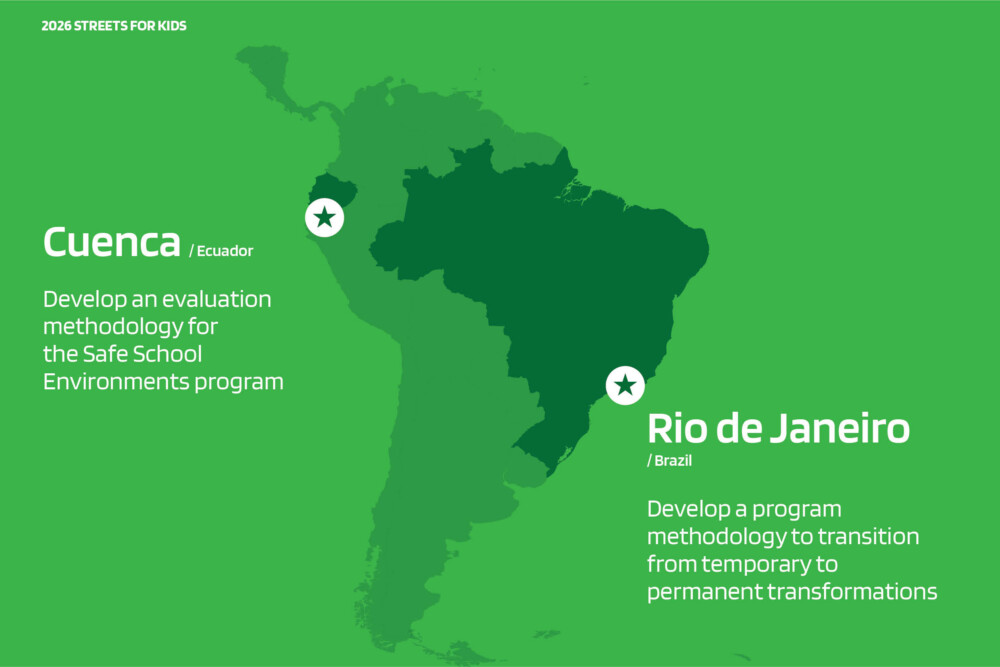
In 2025, the GDCI Streets for Kids program launched a regional call across Brazil, Colombia, and Ecuador for the Leadership Accelerator. The overwhelming response highlighted a shared priority: focusing on school environments to transform urban spaces into more welcoming and supportive places for children. Out of the participating cities, Rio de Janeiro, Brazil, and Cuenca, Ecuador, were selected to receive dedicated technical assistance and a seed grant to strengthen and expand their existing local programs.
GDCI Streets for Kids technical assistance supported cities in strengthening, expanding, and institutionalizing child-focused street design initiatives.
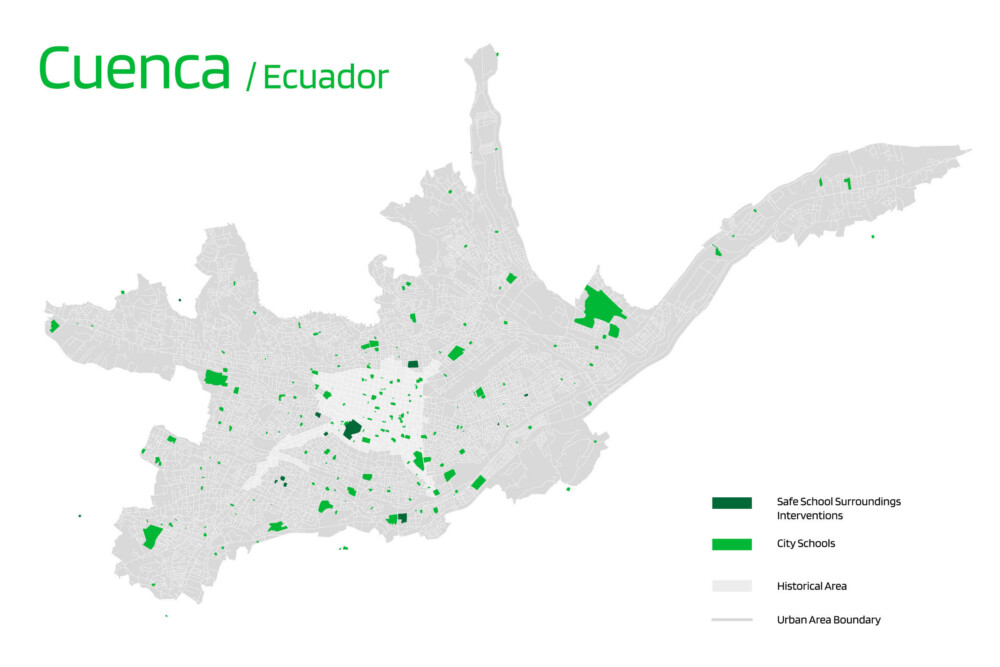
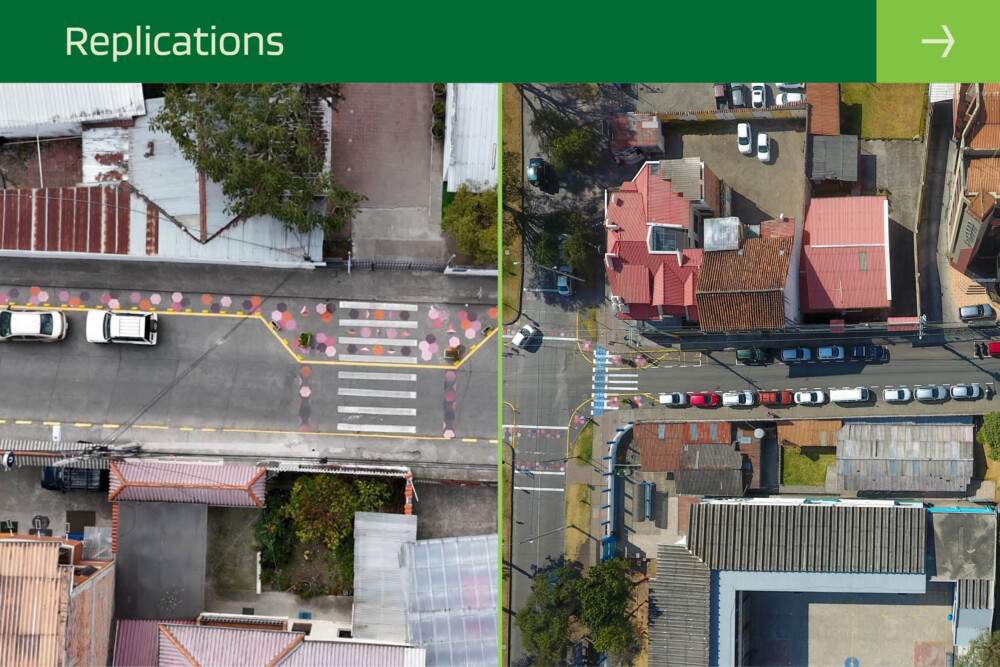
Cuenca’s “Safe Schools Environments” program was launched in 2022, with the initiative replicated across 12 schools and benefiting over 9,000 students to date.
Through GDCI technical assistance, the city implemented a pilot transformation to build cross-departmental collaboration around a new evaluation methodology.
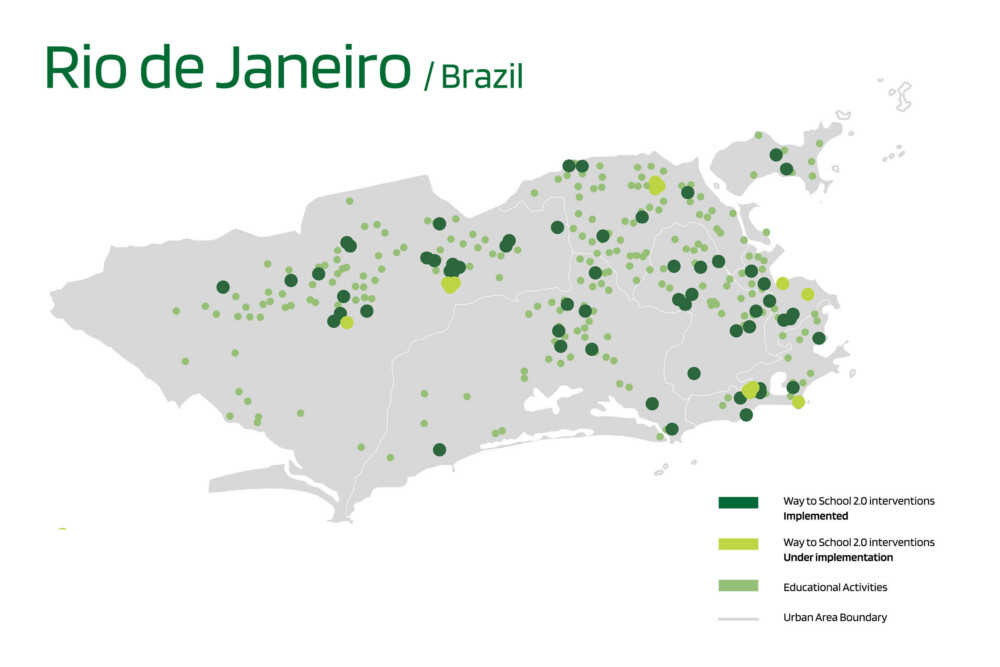
Rio de Janeiro’s “On my way to school 2.0” program was launched in 2022, transforming over 90 school environments to date and benefiting over 40,000 students to date.
With GDCI technical assistance, the city developed a process to transition temporary and interim street designs into permanent improvements.
Cuenca’s Journey: Developing and testing a new evaluation methodology
School-related trips are the second most common travel purpose in Cuenca, accounting for 22% of all local-level mobility, and are primarily taken by children and adolescents. Between 2021 and 2025, the city recorded over 27,000 traffic incidents, with nearly 40% of occurring in school environments. To address road safety risks, support children’s well-being, and encourage more active mobility, the General Directorate of Mobility Management (DGM) and the Mobility, Transit and Transportation Public Company (EMOV EP), alongside local academic partners, initiated the redesign of streets around schools. In 2022, local teams participated in the first cohort of the global Streets for Kids Leadership Accelerator, using the opportunity to develop technical capacity and pilot a street intervention through the Pinceles y Margaritas transformation.
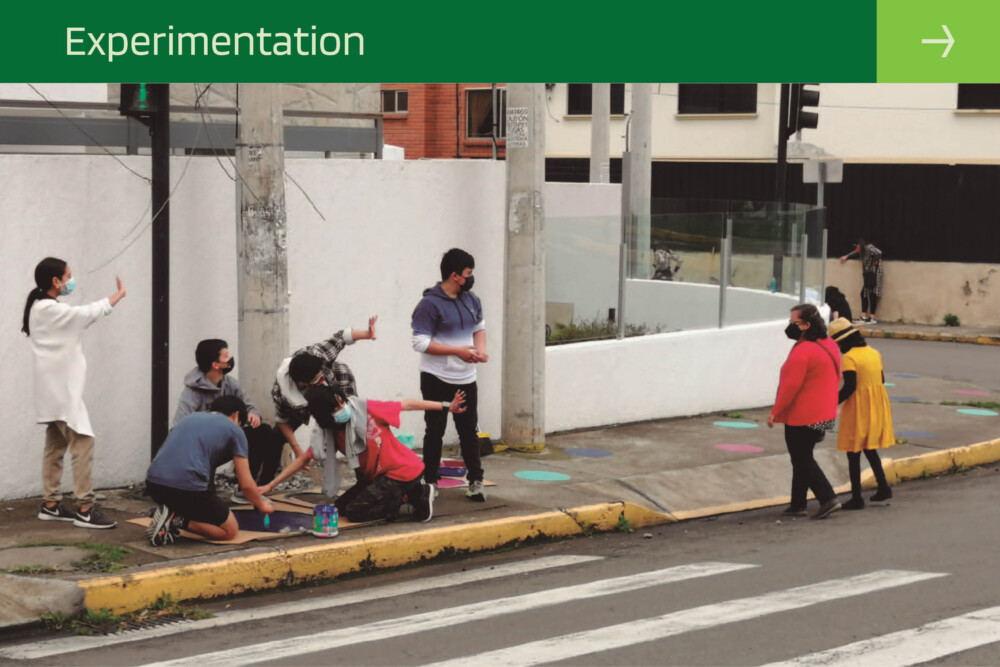
In 2020, the city partnered with local nonprofit organization Huasipichanga to co-design school streets with students and foster child-friendly public spaces.
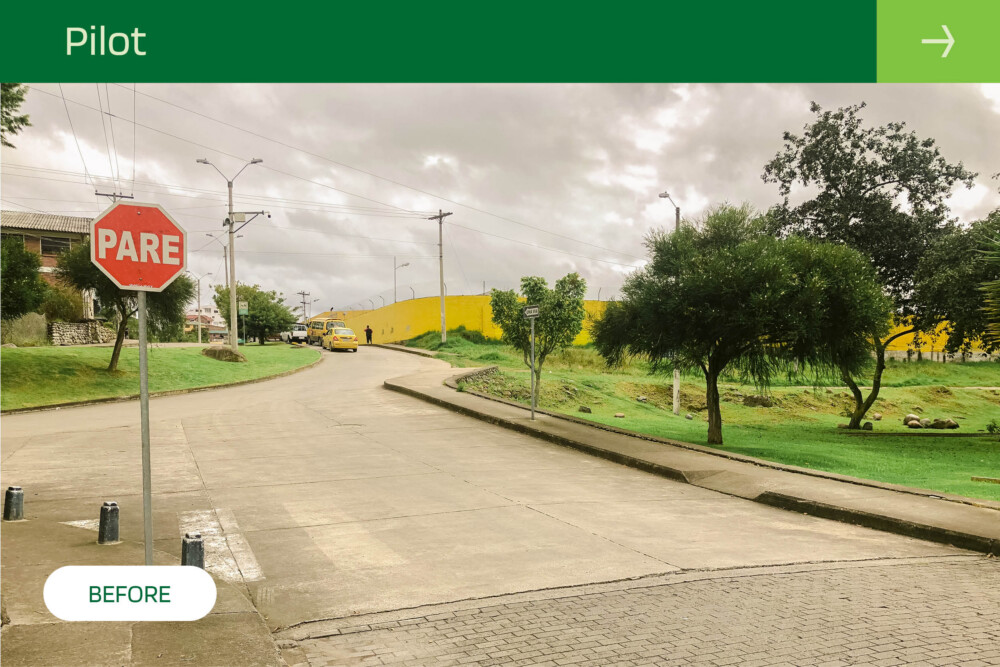
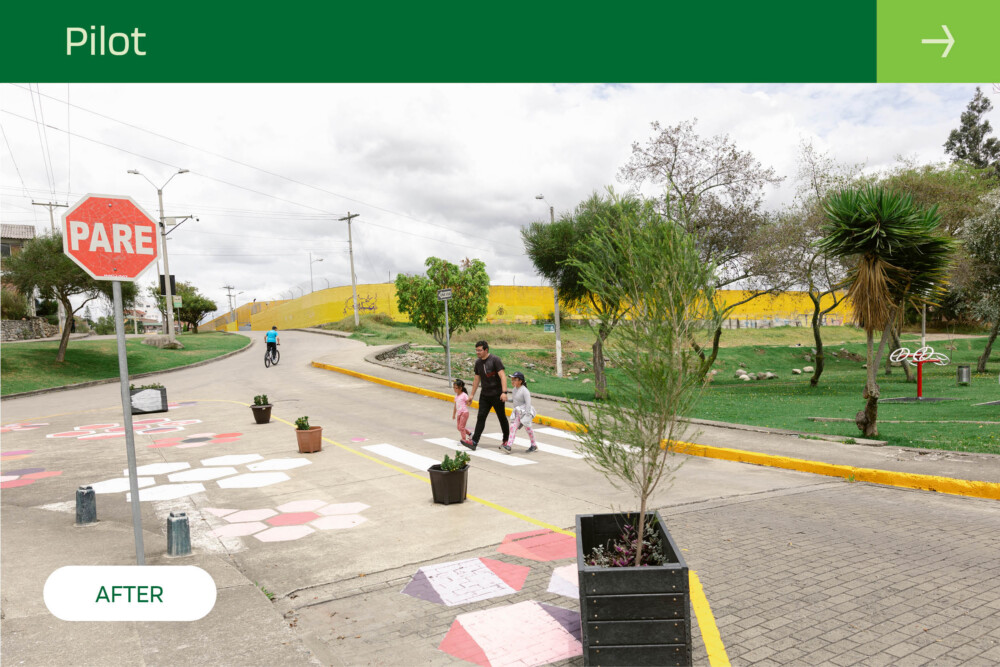
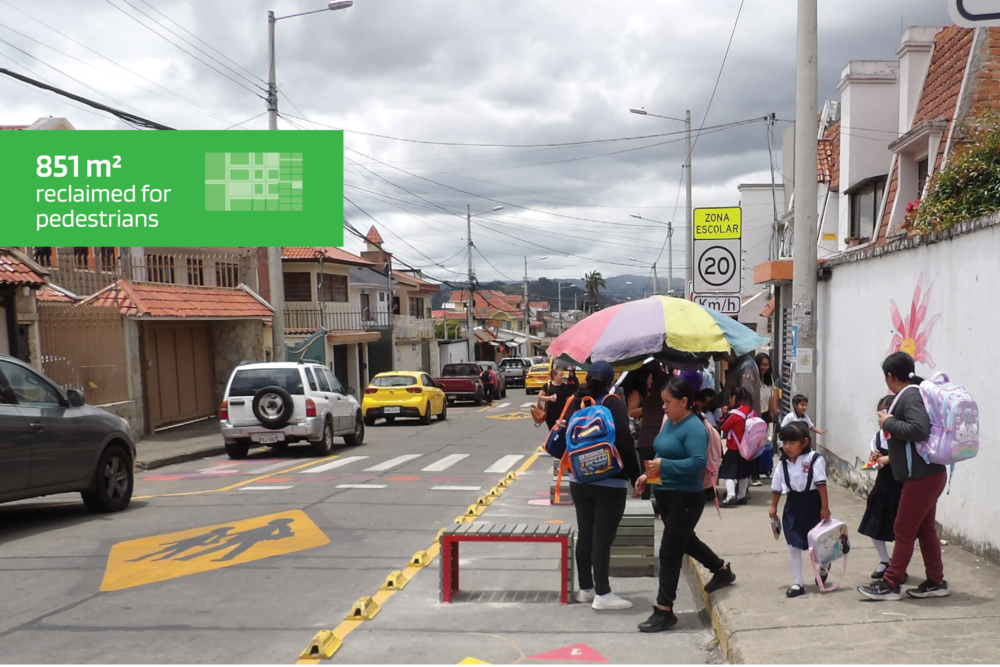
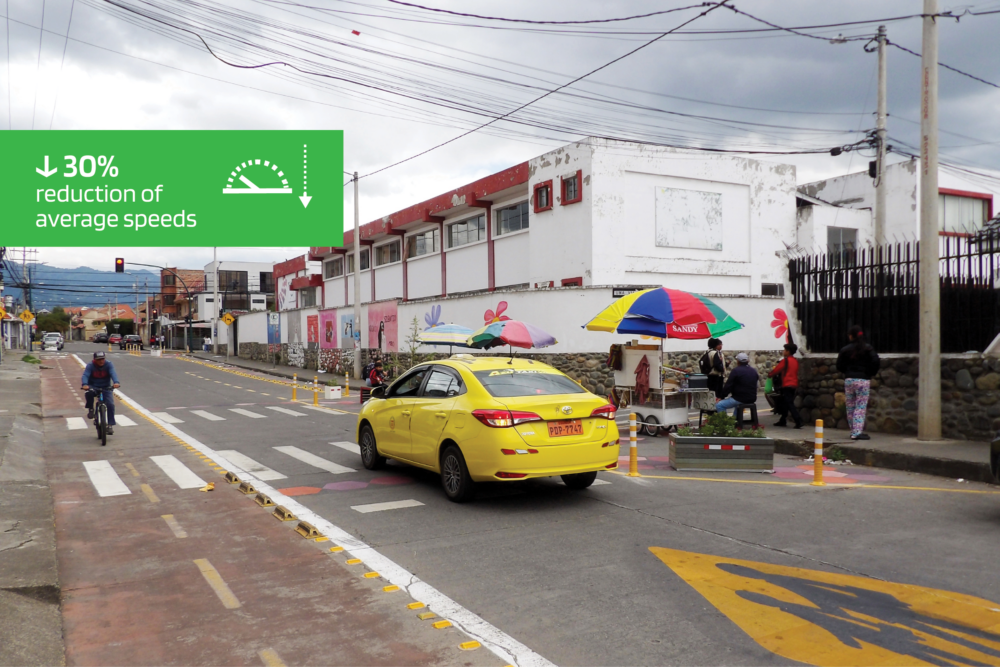
As part of the 2022 Streets for Kids Leadership Accelerator, the city designed and piloted a street transformation at Pinceles y Margaritas School.
The pilot's success built strong municipal support and inspired other schools across the city to request child-friendly street interventions of their own.
Building on this momentum, the city launched the Safe School Surroundings Program, scaling up the initial pilot to 11 additional school sites.
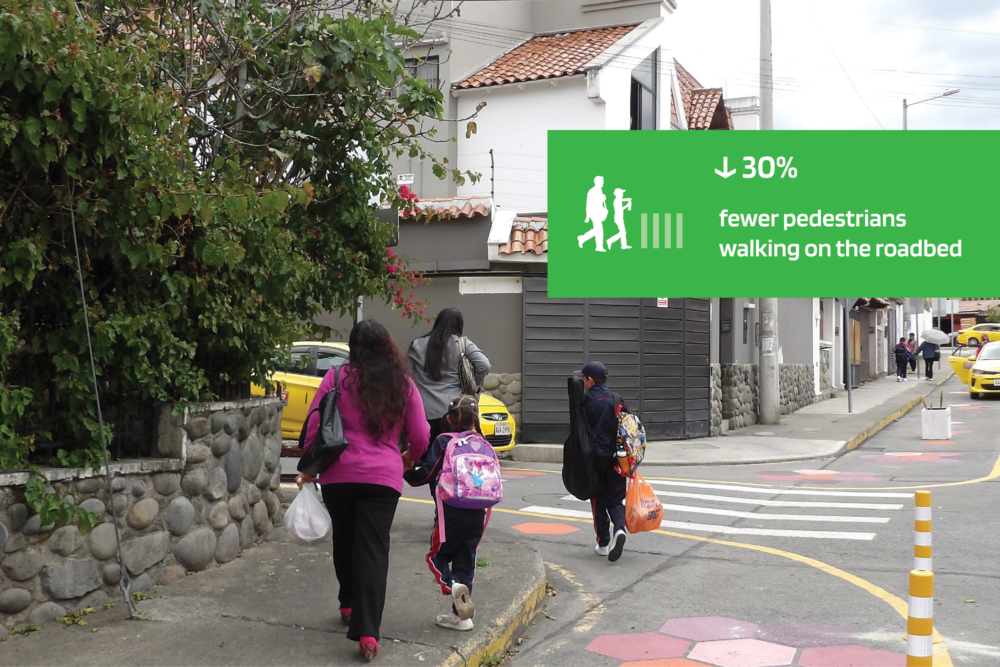
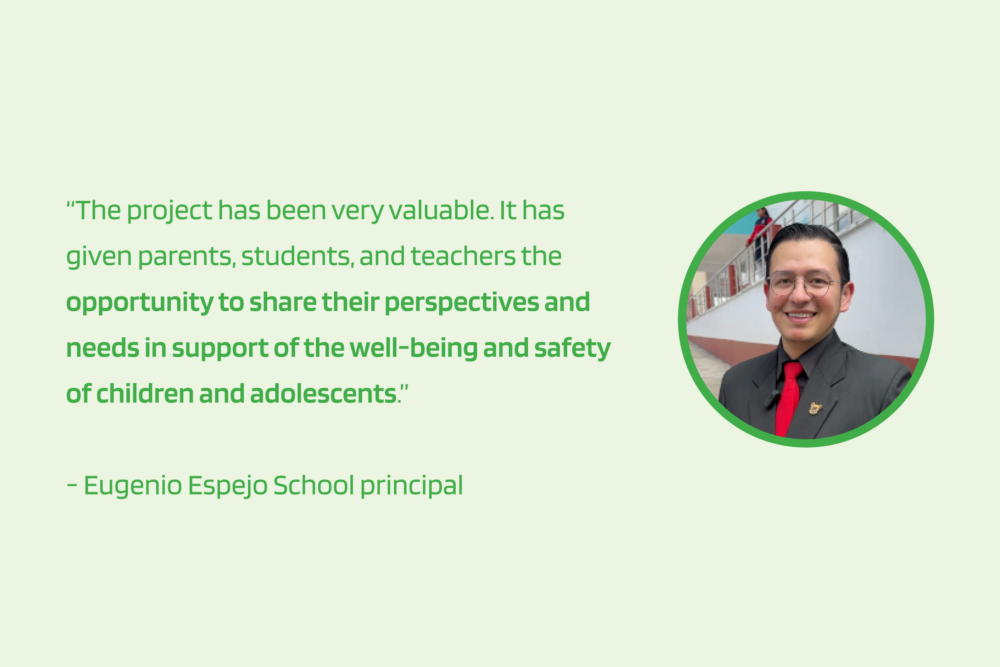
Through the Streets for Kids Regional Leadership Accelerator, the city refined its evaluation methodology with a pilot at Eugenio Espejo School, drawing on its insights and prior experience to publish a new Methodological Guide.
Building on this initial experience, by 2025, the city had established a permanent funding model that allocated 50% of annual vehicle tax revenue to active mobility infrastructure, ensuring sustained expansion of the initiative. With an initial investment of over $75,000 USD, Cuenca completed 12 school street interventions at a steady rate of two to three projects per year, directly improving safety infrastructure for more than 9,000 students. At the time the team applied for support to scale up their initiative, the city had received more than 90 requests from schools to join the program.
“I believe the key factors in scaling these projects center on using evidence, improving inter-institutional coordination, and continually refining our processes to collect data and deliver on-the-ground solutions.”
Irene Cárdenas
Active Mobility Specialist, Cuenca General Directorate of Mobility Management
Piloting a new evaluation methodology: The Eugenio Espejo school surroundings
The technical assistance focused on two primary components: formalizing the program and producing an operational guide detailing departmental roles, responsibilities, and interagency workflows. This process clarified shared goals among partners and established requirements for evaluating and measuring overall program impact.
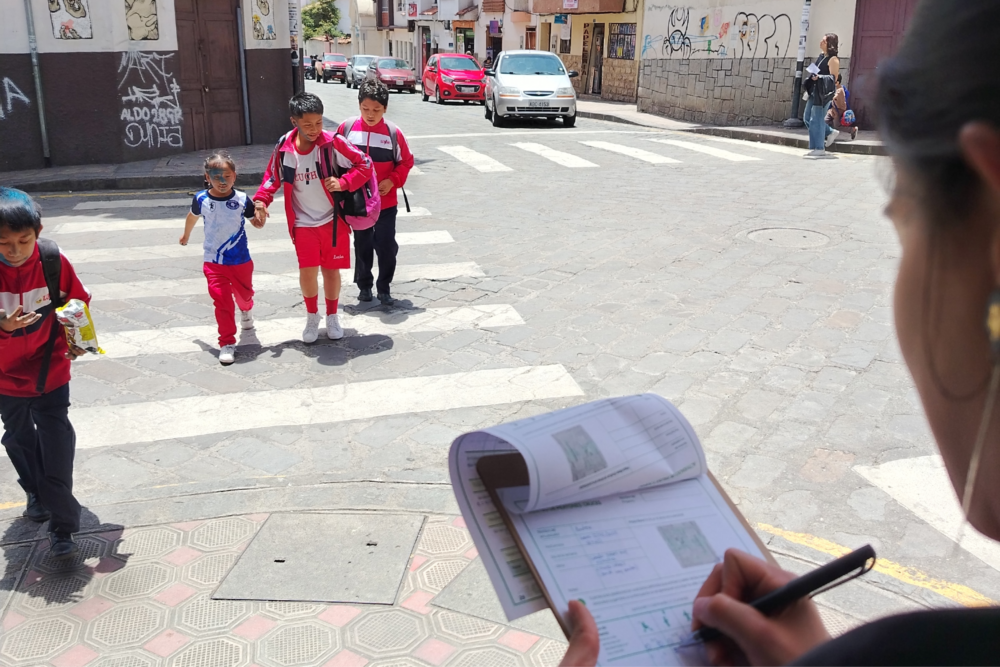
To ground the guide in practical experience, the team tested the methodology at the Eugenio Espejo school, aiming to enhance traffic safety, promote active mobility, and foster social well-being. Balancing time and budget constraints with community engagement and evaluation requirements, the team designed the process to remain repeatable for two to three interventions per year. Data collected during the pilot (launched in the first week of the school year) informed the final street design and served as the foundation for the city’s official school street implementation guide.
By standardizing criteria, evaluation metrics, and operational workflows, the guide establishes a scalable foundation for consistent, measurable implementation across Cuenca. The city plans to continue the program cadence, by which they transform between two and three school environments a year. The transformations will now benefit from continuous evaluation, building the case for sustained expansion of the program and a future transition of the interventions into capital construction.
Rio de Janeiro’s Journey: From temporary to permanent transformations
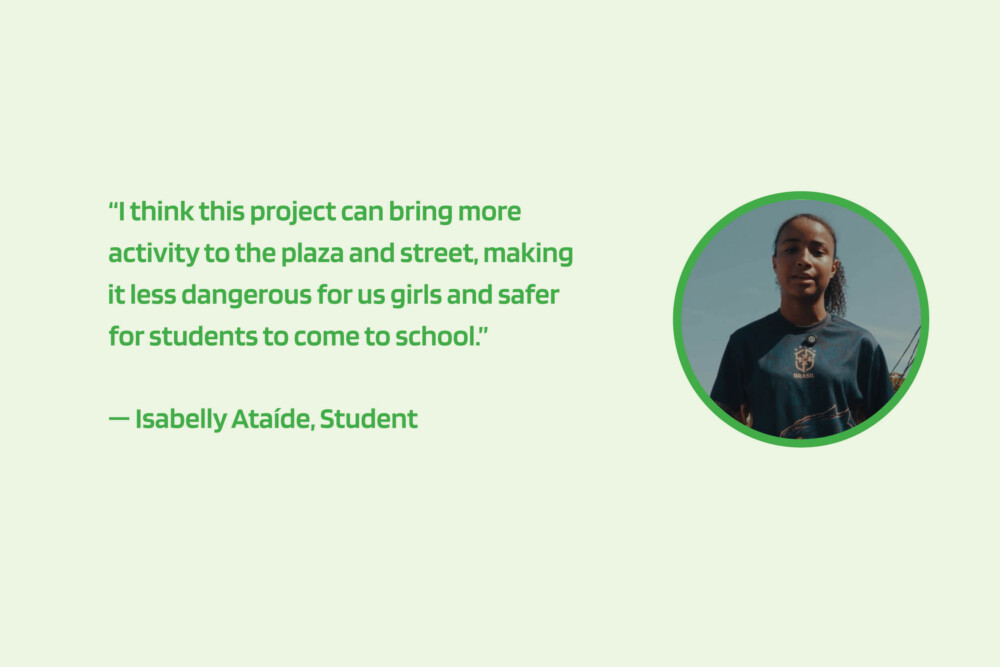
In Rio de Janeiro, nearly half of all municipal students walk to school—a figure that reaches 77% in some neighborhoods. Yet while walking to class, thousands of children navigate a road system that poses significant daily safety risks, culminating in approximately 500 children and adolescents injured or killed in traffic incidents each year. This burden deeply intersects with existing gender and racial disparities: 73% of those accompanying children on these journeys are women, the majority of whom are Black women.
To address road safety risks and promote children’s safer movements in the city, Rio’s mobility agency (CET-Rio), developed a road safety education initiative in partnership with the Municipal Department of Education. Since 2007, the initiative has sought to promote more sustainable mobility options and, through actively listening to students from municipal public schools, to rethink the streets and spaces surrounding schools to make the journey to classrooms safer.
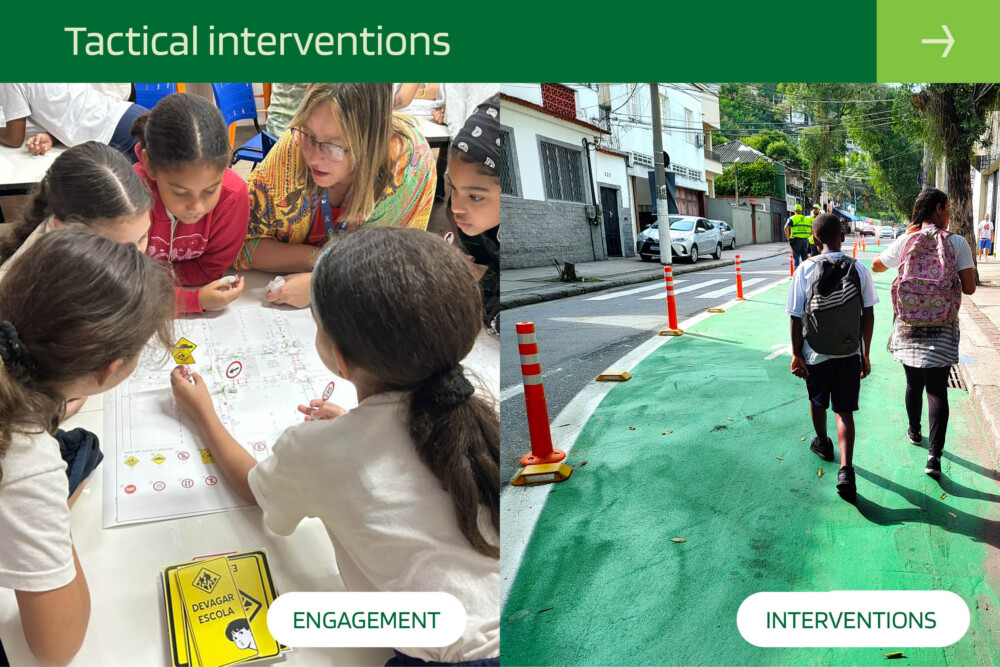
In 2022, the program launched a new phase, offering a replicable methodology for engaging students and implementing tactical interventions, resulting in over 1,700 educational activities, over 300 risk map co-productions with school children, and over 90 interim transformations around schools. Over the years, the program received multiple international recognitions, including the Pan-American Architecture Biennial of Quito 2022 and the What Works Cities, by Bloomberg Philanthropies.
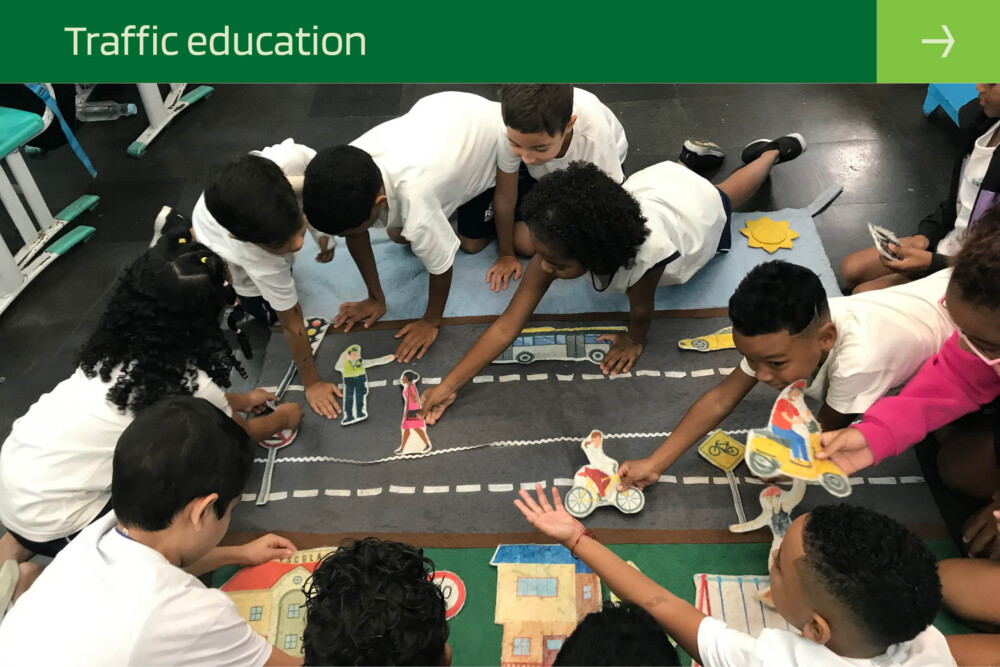
2007 | TRAFFIC EDUCATION. In this phase, the city team delivered 450 interactive school workshops, revealing that classroom education alone cannot shift car-centric perceptions. This highlighted the necessity of co-designing school streets with the students.
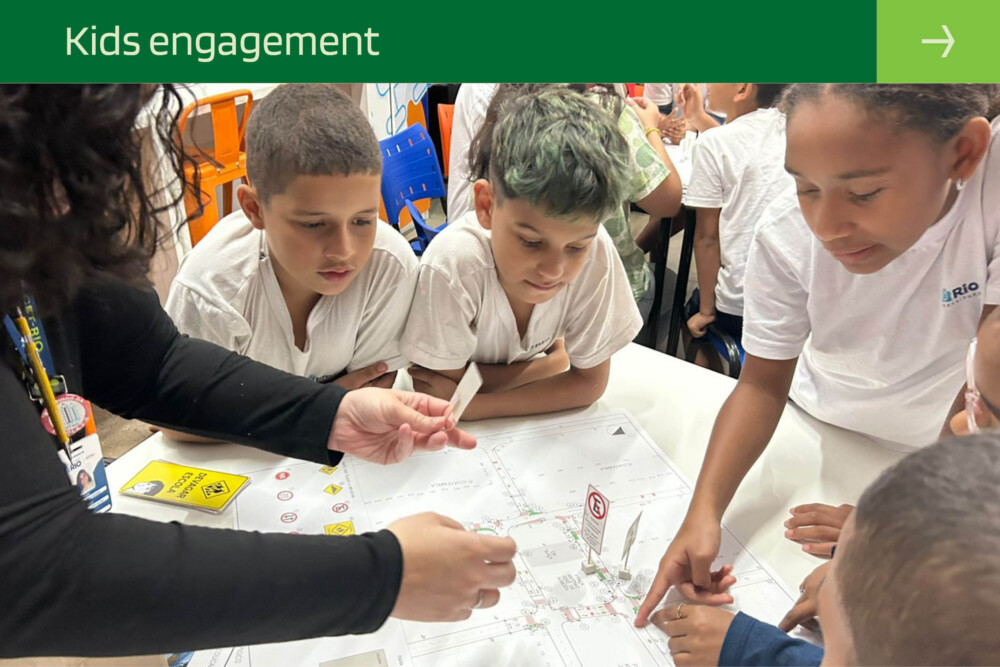
2013 | CENTERING CHILDREN’S PERSPECTIVES. Delivering 550 educational activities and five interim transformations demonstrated the power of risk-mapping tools. By empowering children as local experts, the project shifted their role from passive participants to active co-designers driving urban change.
2021 | TACTICAL REPLICATIONS. Reaching over 40,000 students across 471 schools demonstrated the power of physical design as a learning tool—thereby laying the groundwork for introducing permanent capital infrastructure.
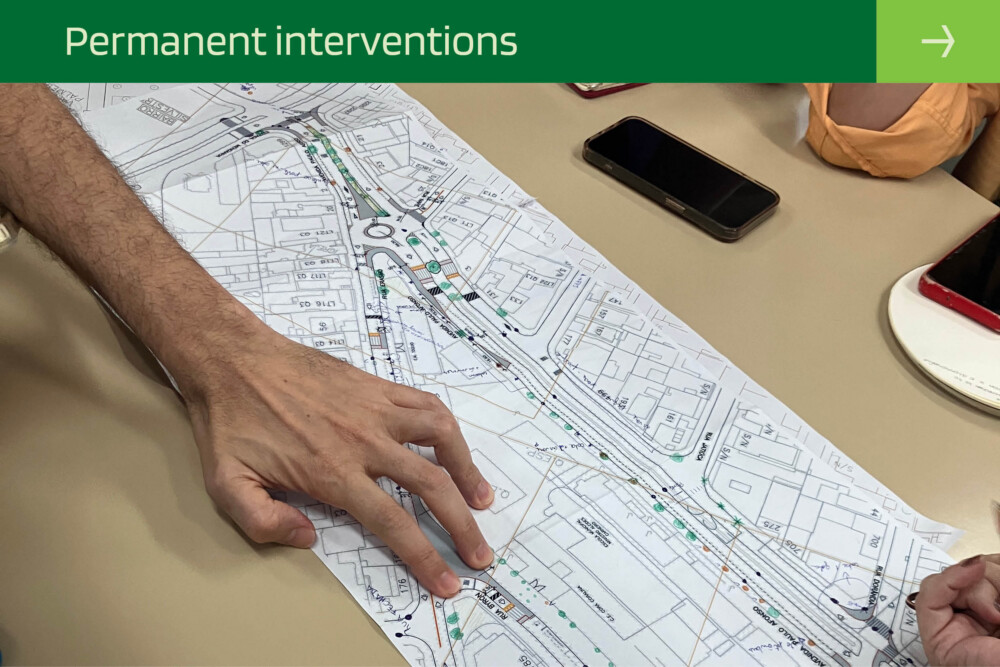
2026 | INSTITUTIONALIZING PERMANENT SOLUTIONS. Establishing a unified methodology and implementing a pilot project bridged the gap between temporary tactical interventions and permanent capital construction.
Transitioning to capital construction: The Municipal Tóquio school surroundings
The technical assistance focused on two primary components: identifying potential alignment with other stakeholders in the city to support one pilot’s transition into a permanent transformation, and strengthening the processes for design, engagement, evaluation, implementation, and documentation for future projects.
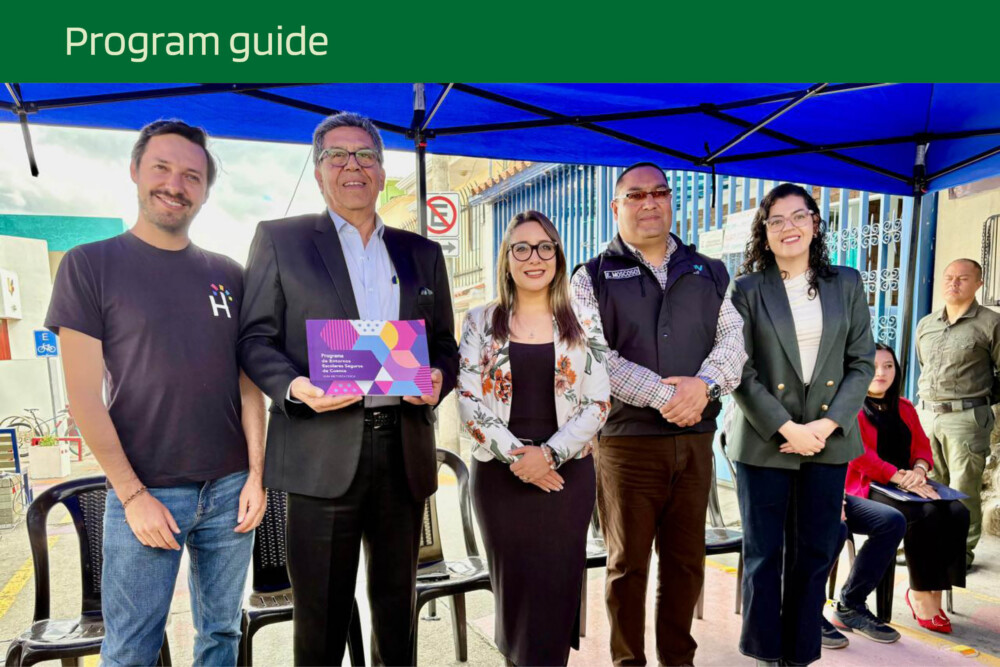
To this end, the team identified key entry points that would need to be revisited, from changing the way the program is shared and communicated, through prioritizing key program and project metrics, rethinking their design strategies, and expanding their engagement process from one that targeted the school children to one that invites the entire community to understand and respond to the proposed transformation. These processes were then documented in a program guide.
“The ‘On the Way to School’ project is a major benchmark in the city of Rio de Janeiro [...]. It is with great pride that this Planning Office of the Civil House/SUBPAR participates in phase 3.0, which seeks even greater innovation and cross-cutting implementation of permanent solutions to increase the safety of our citizens' commutes. This project is aligned with the local 2030 Agenda and promotes sustainability on different fronts, whether through participatory methods and active listening, or by addressing targets related to the SDG, which encompass fairer, safer, and more resilient cities.”
Daniel Mancebo
General Coordinator of the Planning Office (EPL/SUBPAR/CVL)
"A Caminho da Escola shows our students that they don't have to wait until they grow up to do this. Even as children and adolescents, they can take on this role and transform their realities. This is essential for each of them: realizing that their voices matter and that they can and should take part in building a better Rio de Janeiro. The city benefits too: a city that is good for children and adolescents is a better city for everyone. The project is also a model of what we believe in when it comes to public management: when different agencies come together, like CET-Rio and SME, we achieve much more. The child who studies in SME schools is the same child who walks home along the streets that CET-Rio looks after. When we work together, we can support that citizen much better."
Helena Werneck
Coordinator of Comprehensive Education, Office of the Undersecretary for Teaching/SME
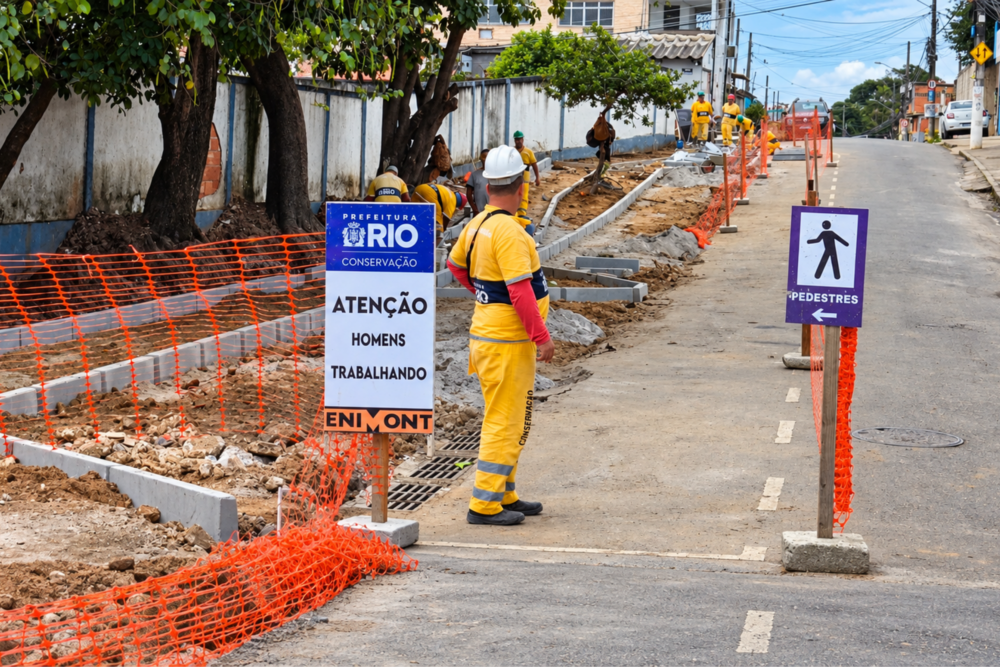
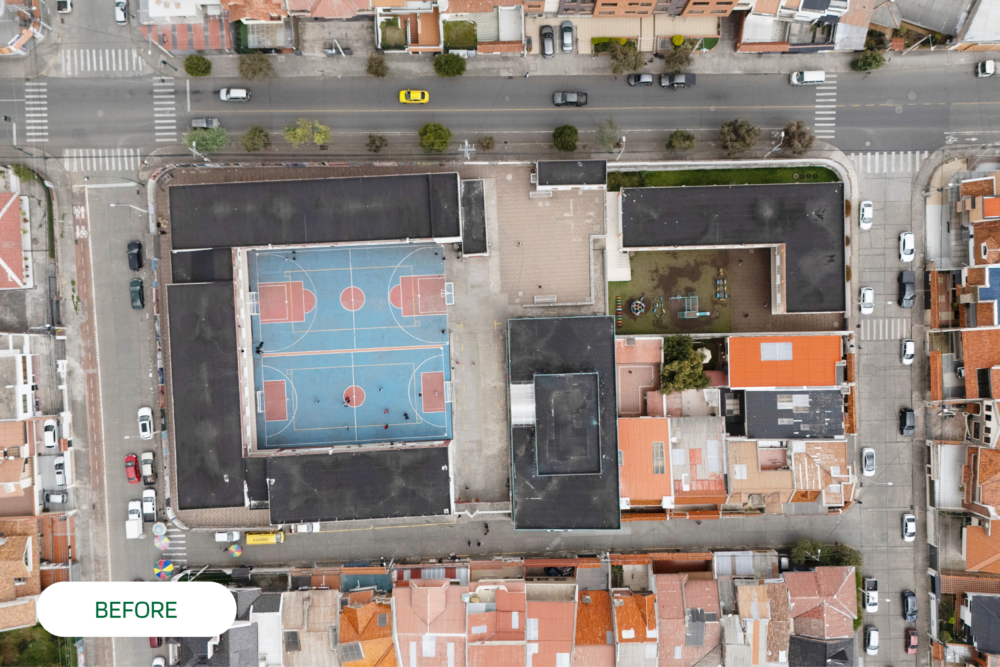
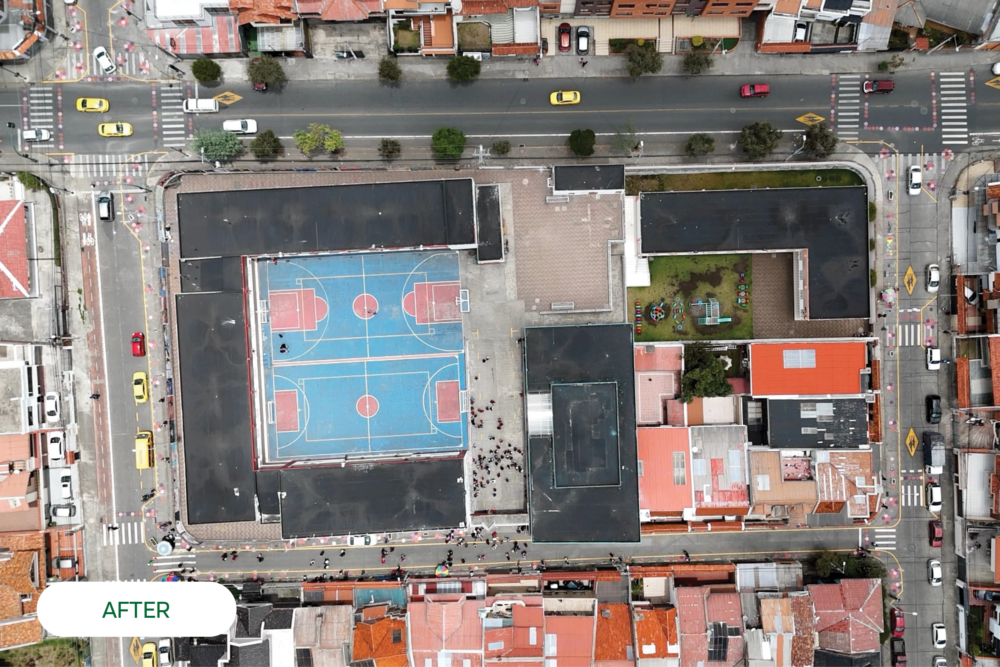
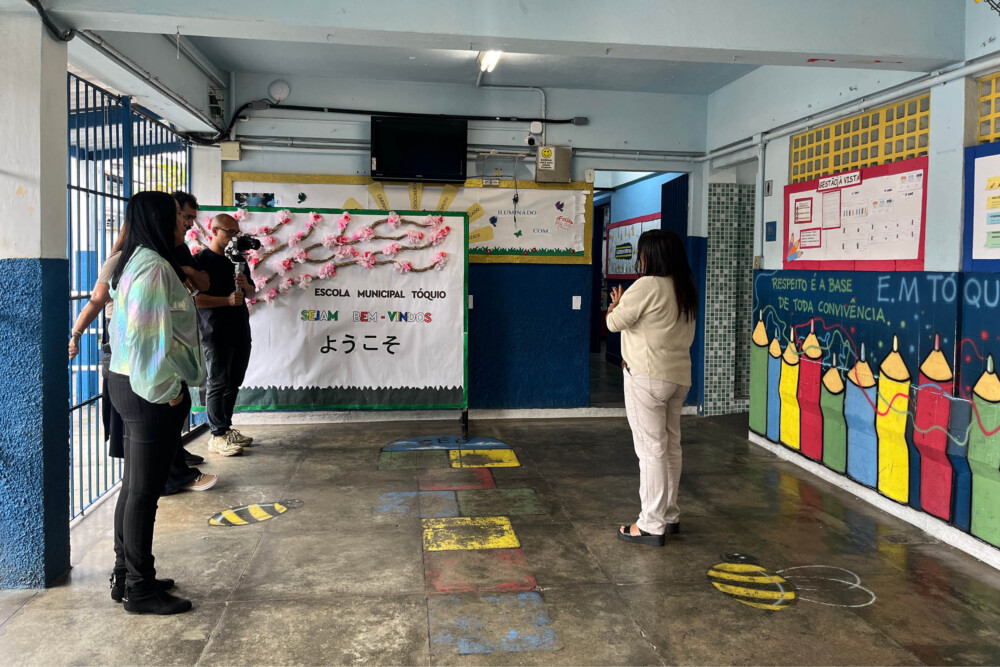
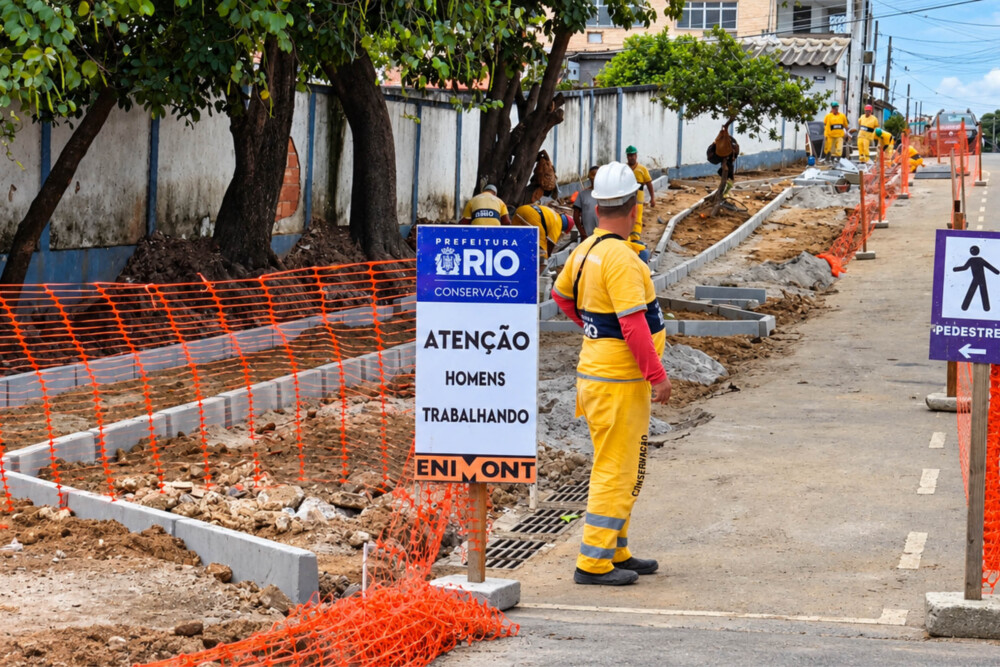
To ground the guide in practical experience, the team tested the methodology in the surroundings of the Municipal Tóquio school, the site of an interim transformation that aligned with the priorities of Rio’s Public Works Department (SECONSERVA) “Accessible Routes” program, which agreed to implement capital improvements, including extending sidewalks and installing pedestrian ramps.
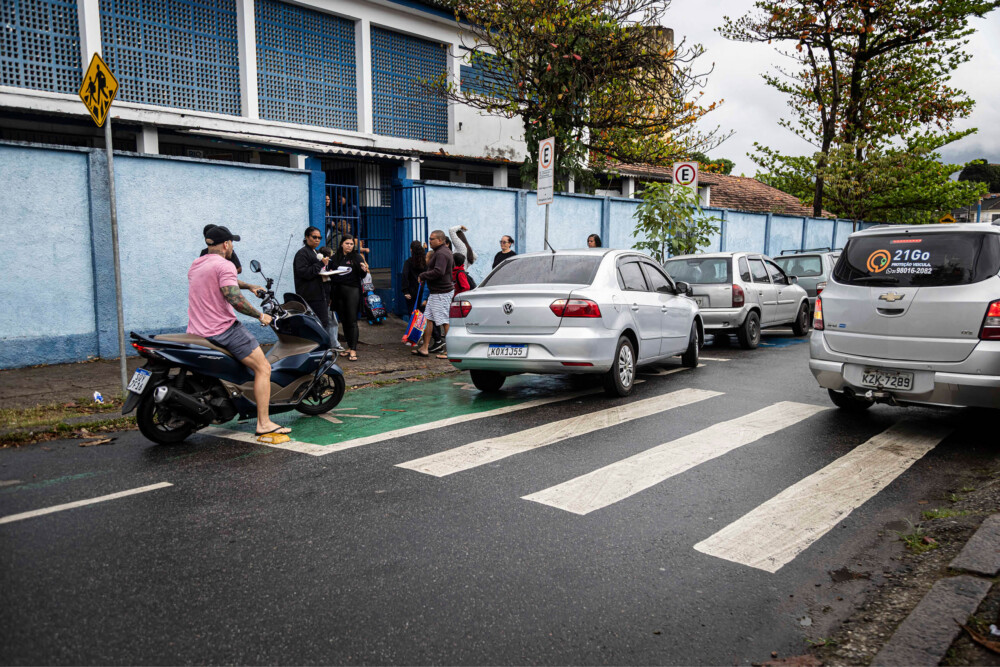
SITE SELECTION.
A multi-criteria evaluation matrix prioritized Municipal Tóquio and Municipal Minister Alcides Carneiro schools by analyzing walking habits, sidewalk quality, and crossing risks. Aligning the pilot with the "Accessible Routes" initiative secured municipal support to convert interim street design into permanent capital works. Photo credit: Hermes Caruzo
EVALUATING EXISTING CONDITIONS: The team mapped street activity and pedestrian desire lines while measuring peak-hour traffic speeds and volumes. Paired with perception surveys, this baseline evidence guided design decisions and demonstrated the value of program-wide data collection. Photo credit: Hermes Caruzo
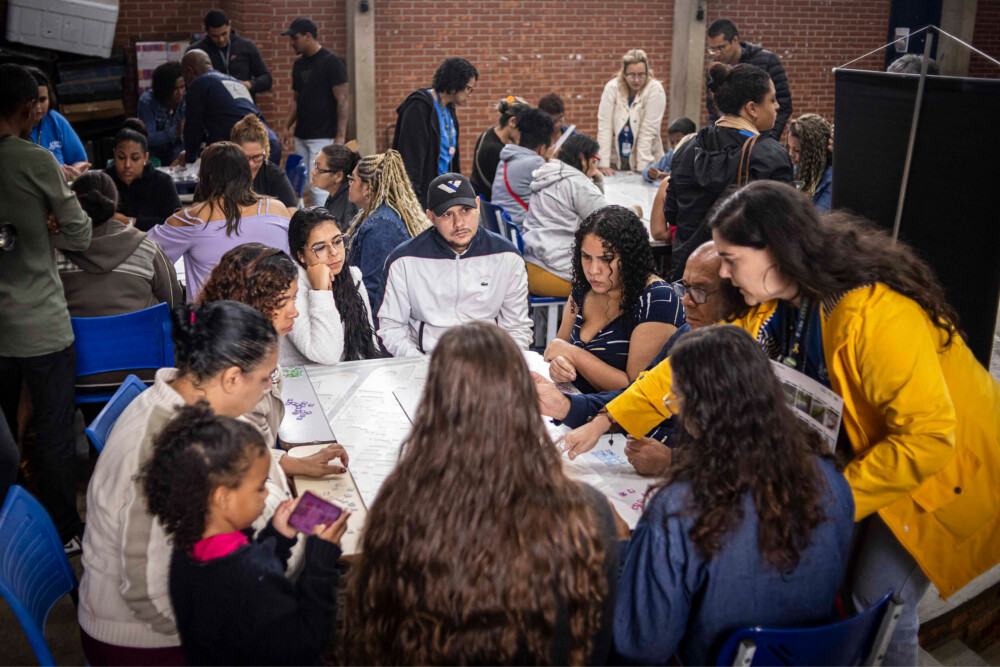
COMMUNITY ENGAGEMENT:
A co-creation workshop engaged school members and the wider community—capturing diverse local input to guide current designs and inform future iterations. Photo credit: Hermes Caruzo
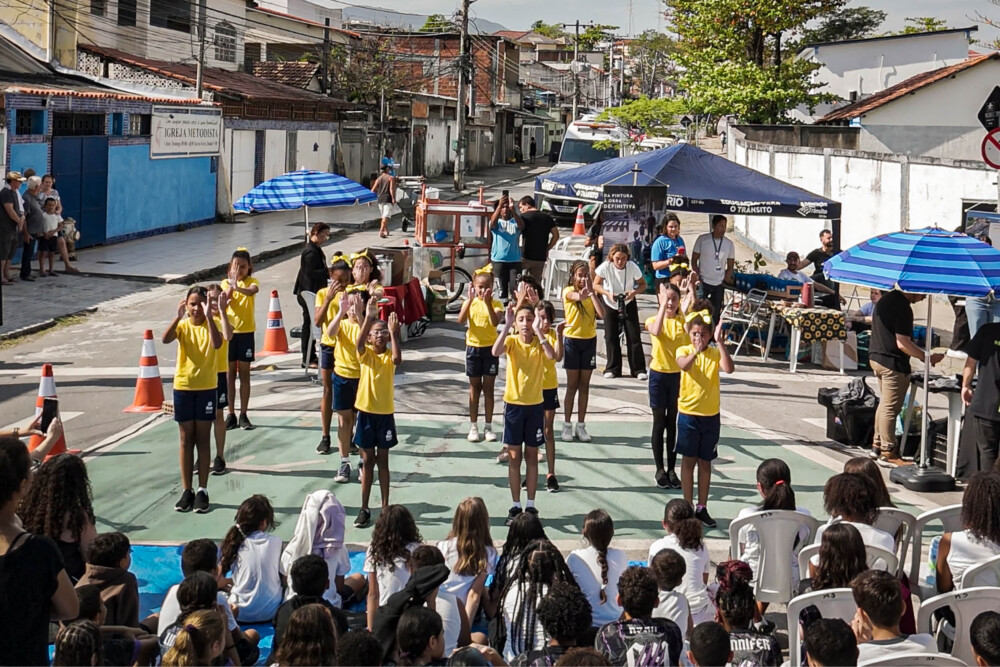
PILOTING A POP-UP EVENT:
A pop-up activation tested proposed public space transformations outside the school. Combining seating, shade, play, and cultural programming helped evaluate spatial layouts, engage local businesses, and gather community feedback—allowing residents to visualize permanent design changes. Photo credit: Hermes Caruzo
FINAL DESIGN AND IMPLEMENTATION: Translating evaluation metrics and community feedback into technical designs, city teams aligned insights into construction-ready plans. Initial capital works are underway, including sidewalk extensions and pedestrian ramps, while evaluation data will directly inform remaining elements scheduled for tactical pilot testing.
To test the process, CET-Rio worked in collaboration with the local Institute Arata, which organized a community-wide pop-up event and community workshops where CET-Rio was able to test a new engagement tool to facilitate discussions. Doubling down on the program’s long-standing practice of listening to children, the extended engagement process allowed the team to refine the design and consider new opportunities to improve children’s experience of the streets around their schools, such as nearby public spaces. This experience built the foundation for a new phase for the “On my way to school” program, while offering important lessons for the ongoing practice of its current phase.
What’s the next step for Streets for Kids in your city? 5 Key actions to scale your impact:
Start with streets near schools: Child-friendly cities should support children’s independent mobility and provide spaces to pause and play across all street types—including residential, commercial, mixed-use, and major thoroughfares. Because school surroundings are primary daily destinations, often evenly distributed across urban areas, and ideal for community engagement, transforming these environments offers an effective entry point for shifting toward citywide child-centered street design.
Map out your journey: A critical first step is to evaluate existing progress. Mapping past interventions, reviewing previously collected data, and visually communicating impact help build alignment with partners, highlight achievements, and identify operational gaps. While resource-intensive, this inventory process is essential for building institutional support and refining workflows.
Define actionable next steps: A long-term vision serves as a guide, but cities should tailor their immediate goals to their stage in the process. For example, Cuenca needed a unified methodology to align stakeholders and secure long-term backing, whereas Rio needed to transition a robust program from temporary pilots to permanent infrastructure.
Ground policy in pilot projects: Pairing policy design with a real-world pilot ensures workflows are realistic and aligned with municipal capacity, timelines, and budgets. High-profile community launches create shared excitement while establishing fixed deadlines that keep interagency partners accountable.
Institutionalize the process: While early innovations often rely on informal opportunities, borrowed equipment, or volunteer goodwill, scaling an initiative requires formalizing goals, roles, and resources. Establishing official protocols ensures continuous growth, helps identify new opportunities for collaboration and resource allocation, enables long-term planning, and protects the program from turnover.
Scaling up school street programs is a complex journey, but its impact reaches far beyond individual school gates. As the experiences of Rio de Janeiro and Cuenca demonstrate, starting at the school block is a powerful catalyst to spark broader conversations about how cities evaluate and design public spaces. By testing child-focused methodologies and building interagency collaboration near schools, city teams can begin reshaping their everyday planning practices—laying the groundwork to transform urban street networks into safer, healthier, and more joyful places for everyone
Sign up for our newsletter to receive GDCI updates
Introducing BICI Global Advisor Cities: Learning from the world’s leading cycling cities to shape the next generation of safe, connected cycling networks.
Drawing on their cities’ experience in advancing cycling, the BICI Global Advisors advisors will bring valuable perspectives on what it takes to build safe, connected, and accessible cycling infrastructure—and how cities can turn ambition into lasting change.
Introducing the Selection Committee for the Bloomberg Initiative for Cycling Infrastructure (BICI)
The Global Designing Cities Initiative is pleased to announce the Selection Committee for the Bloomberg Initiative for Cycling Infrastructure (BICI). The Selection Committee members bring decades of diverse experience working in transportation and urban design in cities around the world. Together they will advise the city selection process, including reviewing and providing feedback on BICI’s application finalists.
Bloomberg Philanthropies and Global Designing Cities Initiative Open Applications for Next Phase of Cycling Infrastructure Program
Announcing the next round of the Bloomberg Initiative for Cycling Infrastructure, a program helping cities around the world rethink their streets through safer, more connected cycling infrastructure.