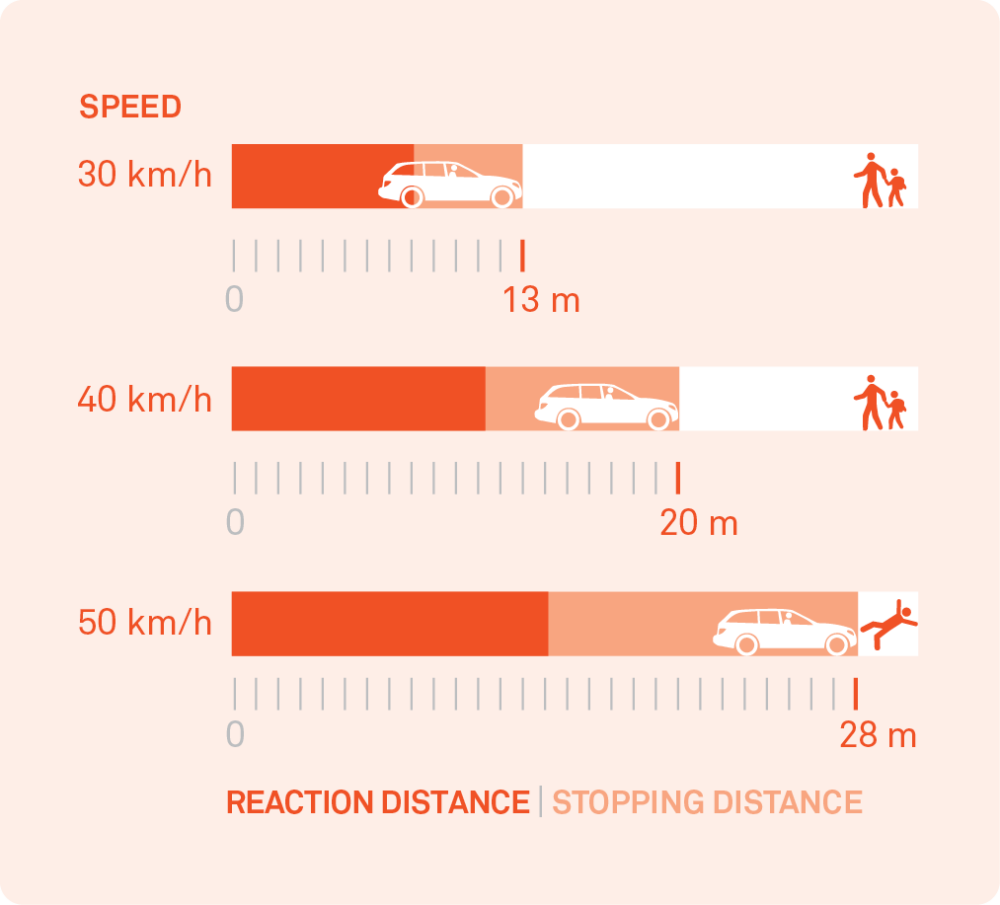
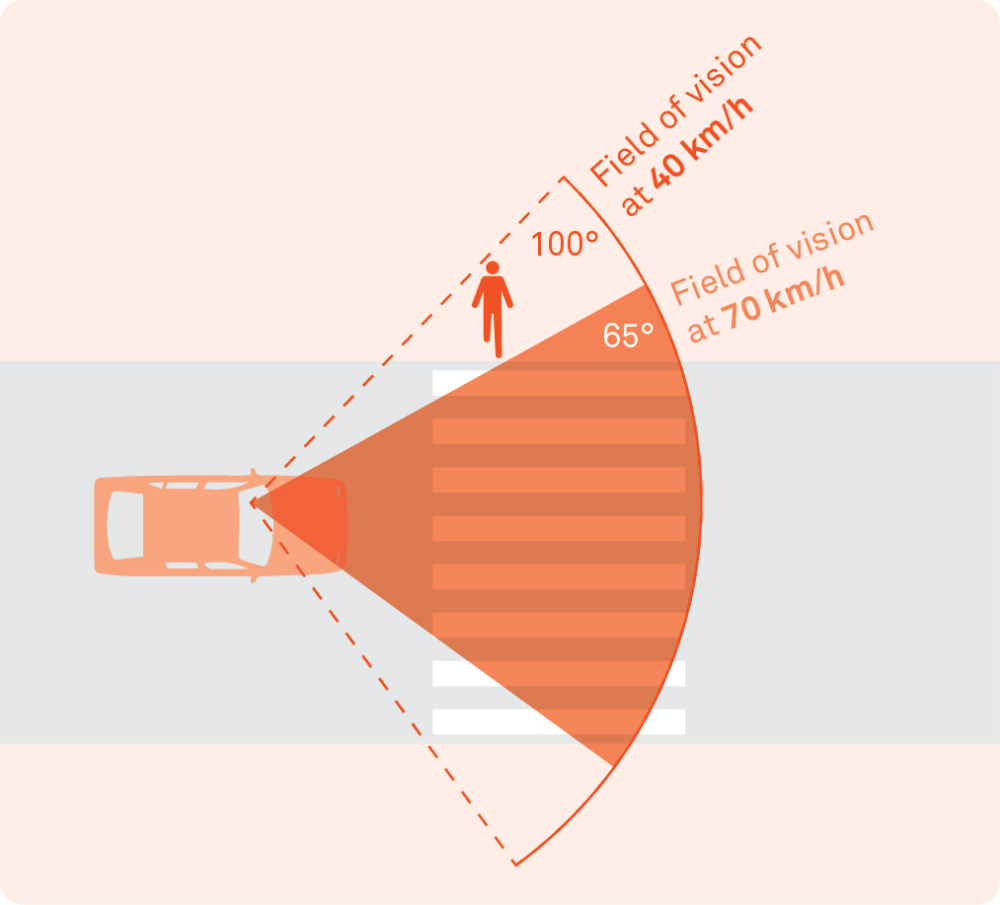
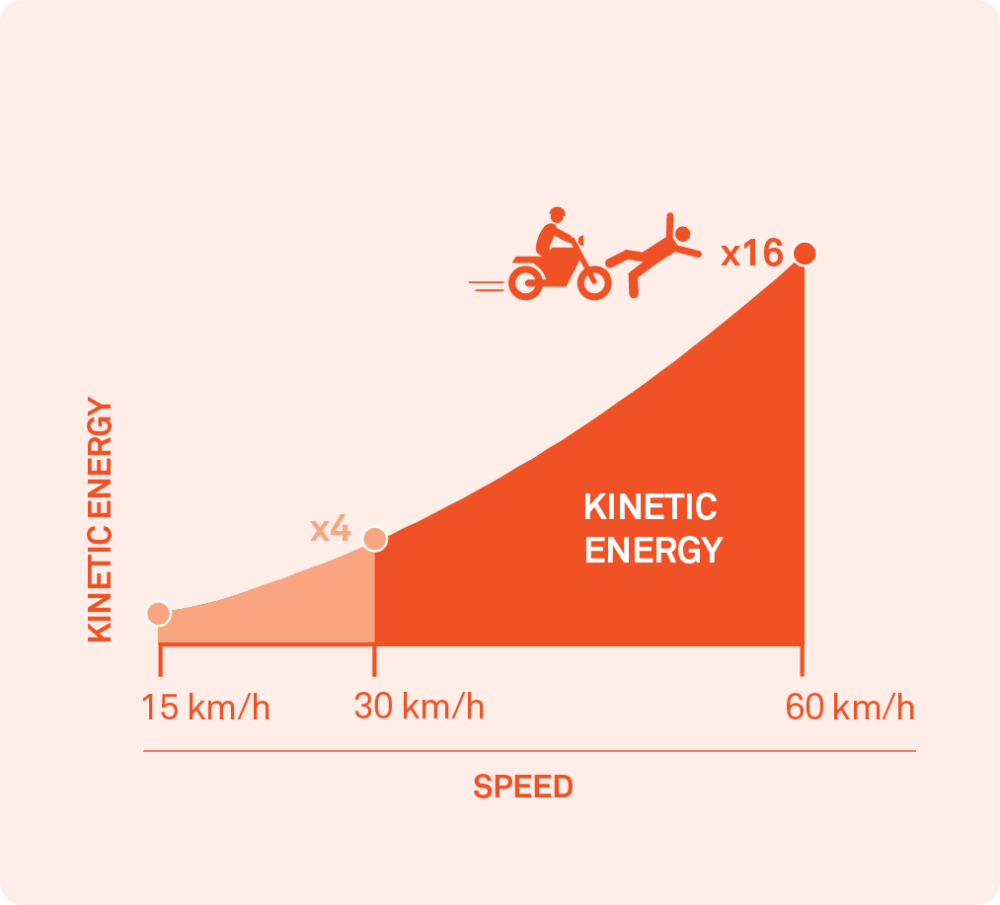
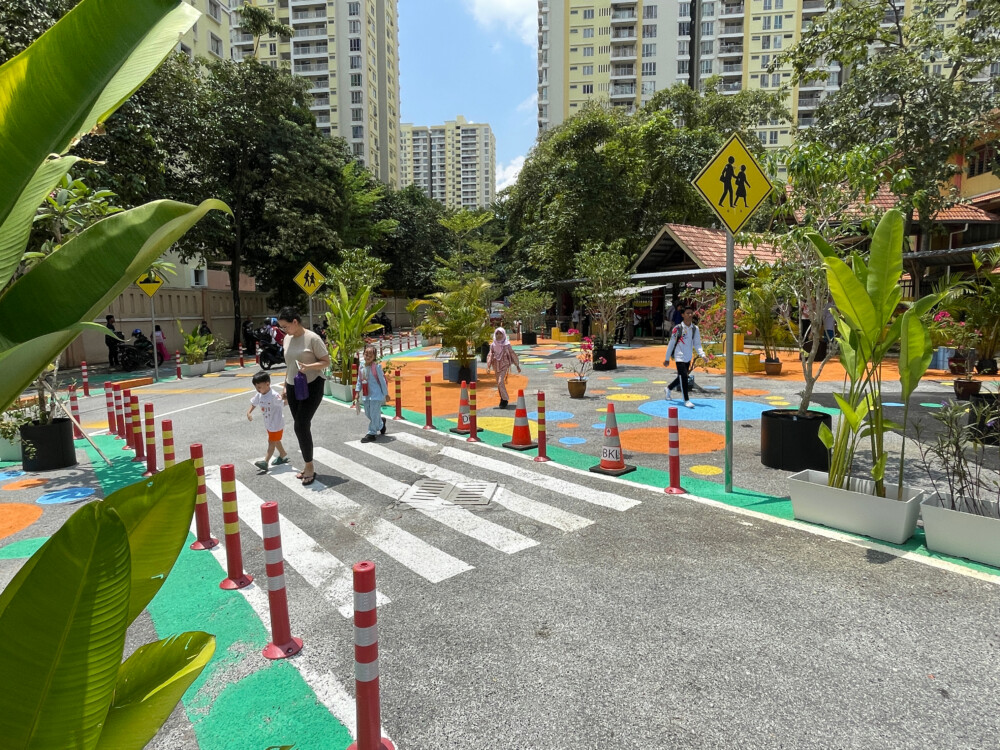
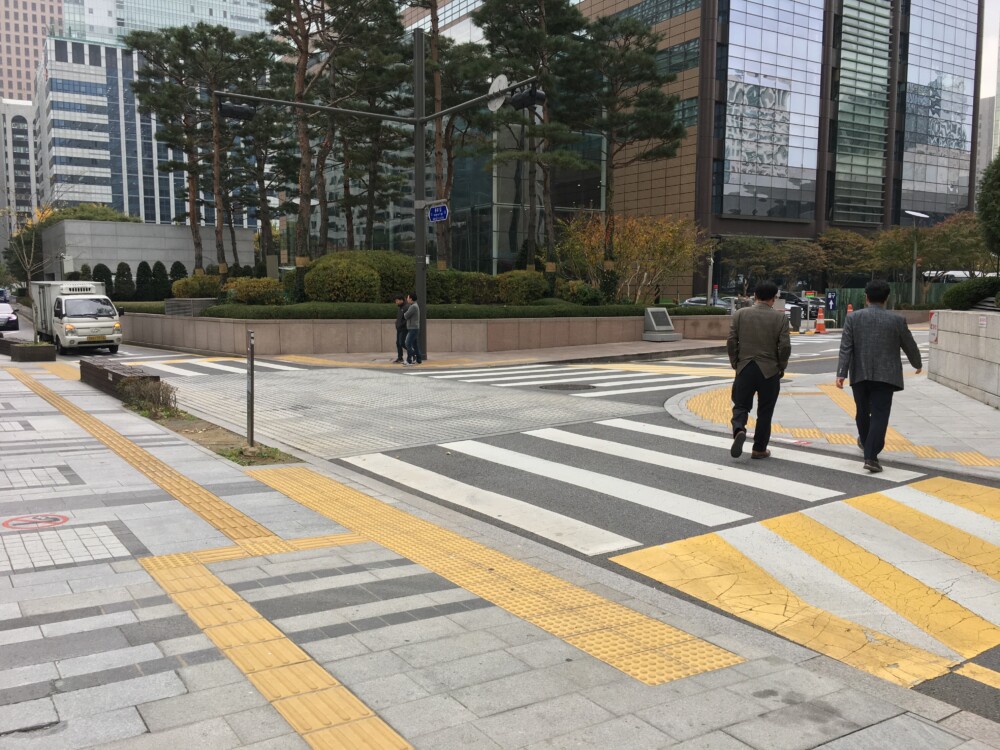
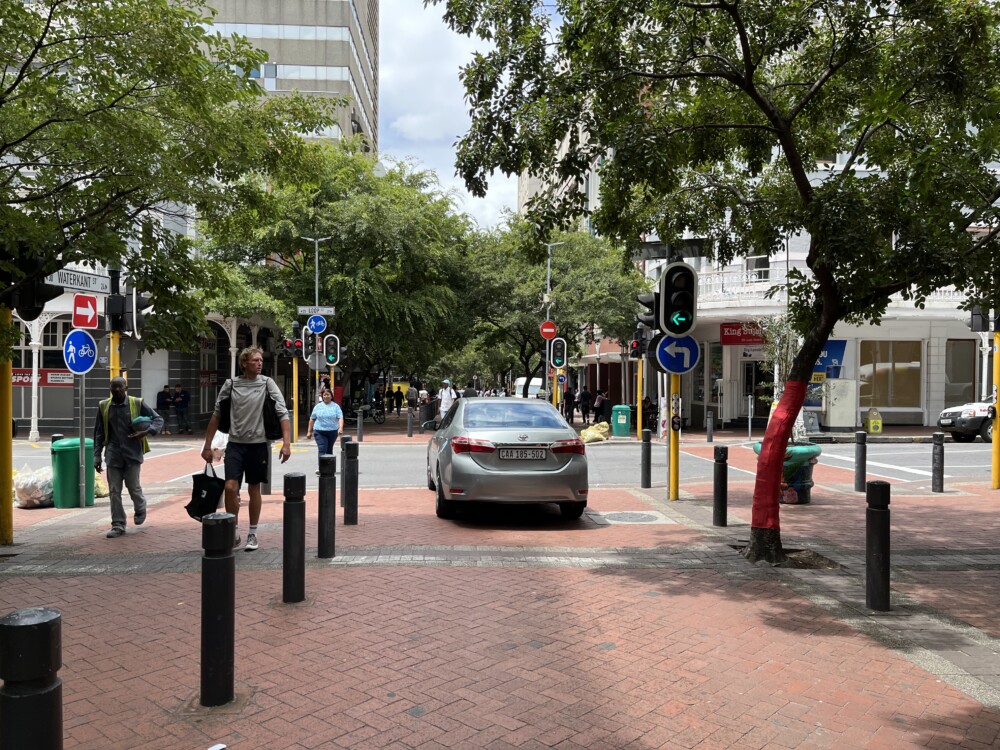
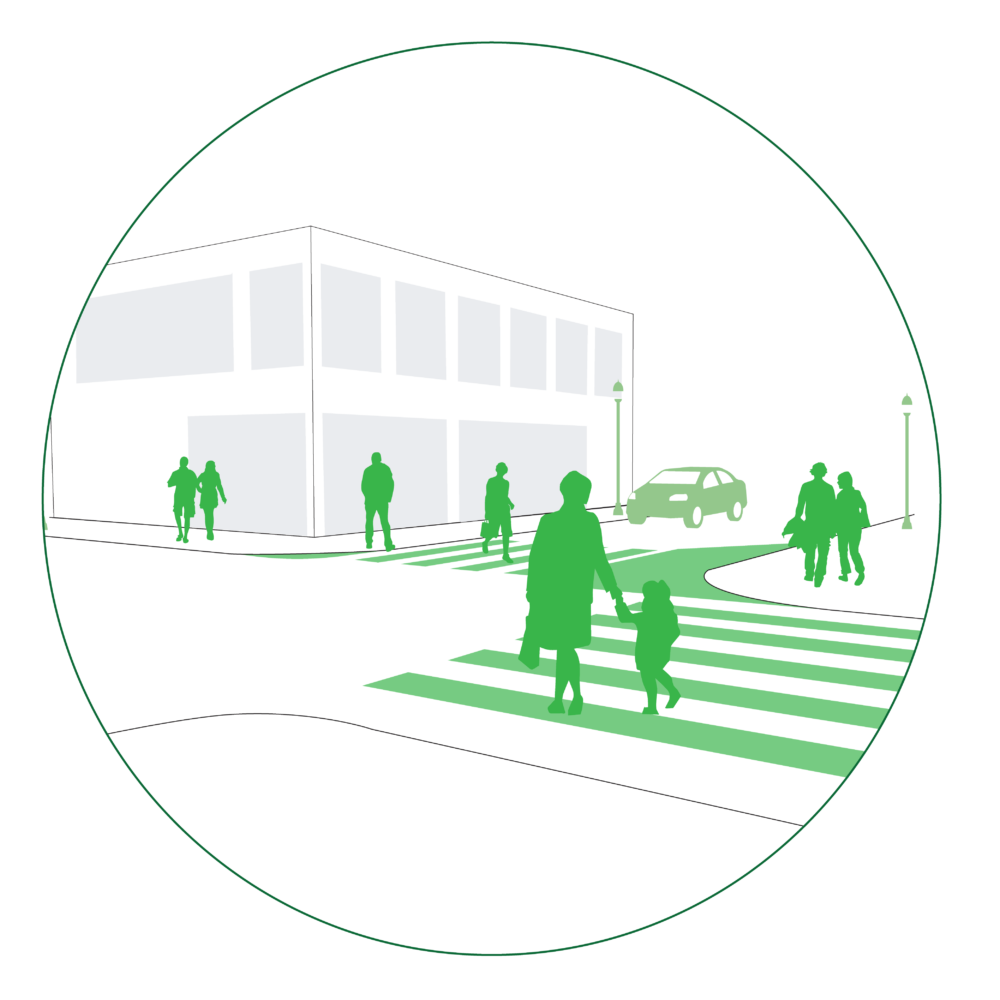
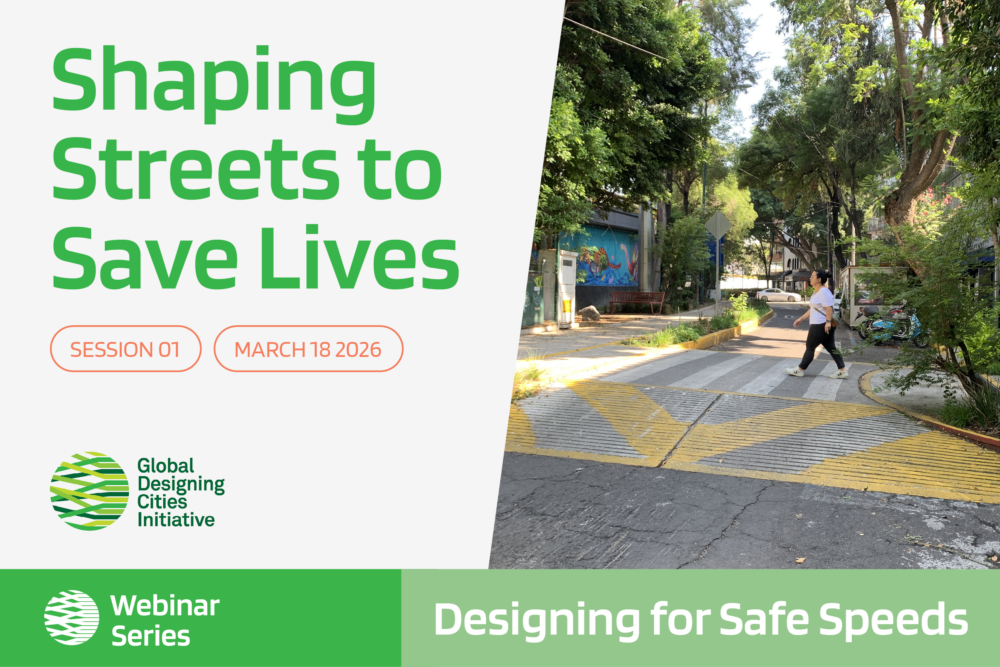
In 2025, GDCI launched Designing for Safe Speeds—a vital supplement to the Global Street Design Guide. This resource provides practitioners, policymakers, and advocates with a clear roadmap to manage speeds and deliver safer, more equitable streets worldwide.
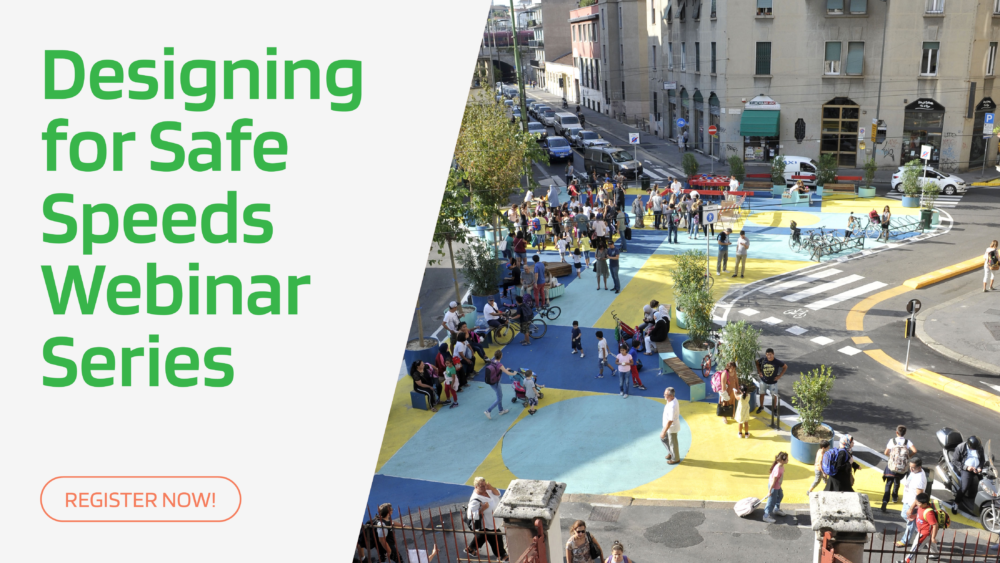
To celebrate this launch, GDCI is hosting a new webinar series to bring these strategies to life. We will explore the guide’s core principles and practical design tools, while highlighting real-world success stories from cities working to create better urban environments for people of all ages, abilities, genders, and backgrounds.
Why safe speeds matter
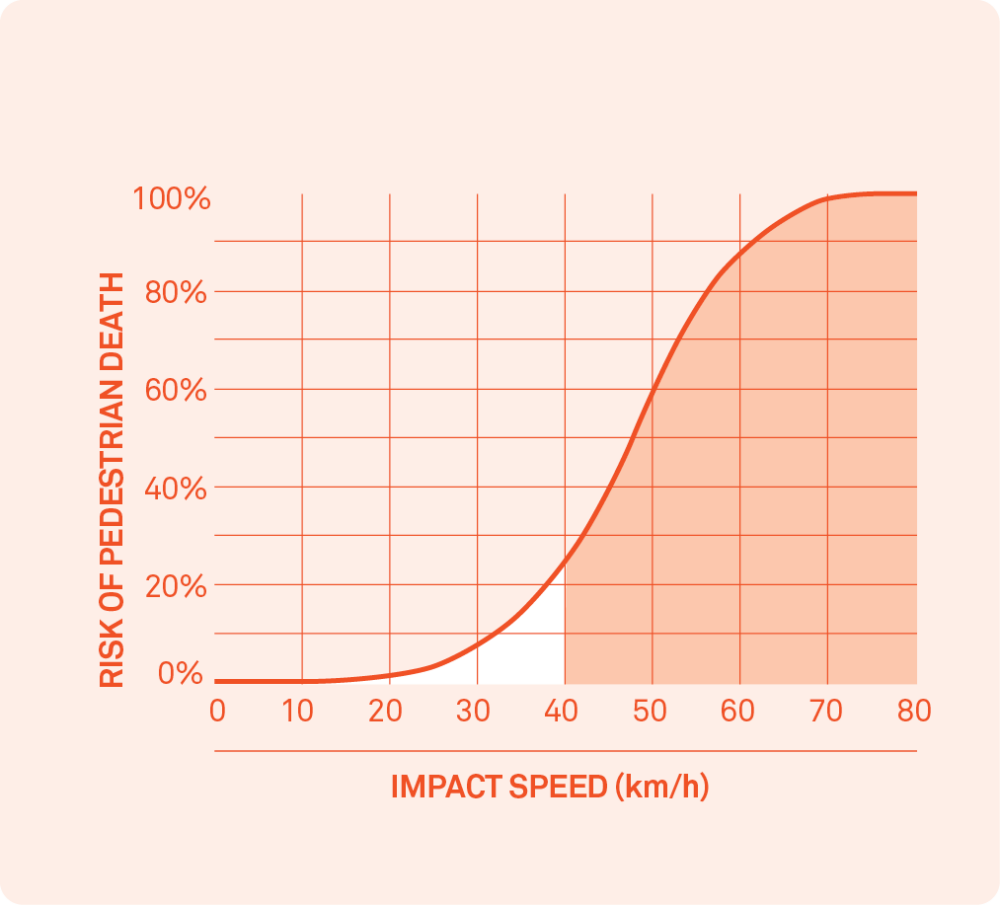
Cities everywhere are facing a critical public health crisis. With traffic-related injuries remaining a leading cause of death for children and young people globally, the need for intervention has never been more urgent. Designing for Safe Speeds captures international best practices, proven policies, and design recommendations that cities have used to reclaim their streets and save lives. Through this webinar series, we aim to show that creating safer, more livable streets isn’t just a goal—it’s a real possibility.
It’s been over 10 years since our partnership with the Bloomberg Philanthropies Initiative for Global Road Safety (BIGRS) began. Together, we have collaborated with 18 cities across 11 countries to provide expert design guidance, implement life-saving road interventions, and deliver capacity-building workshops.
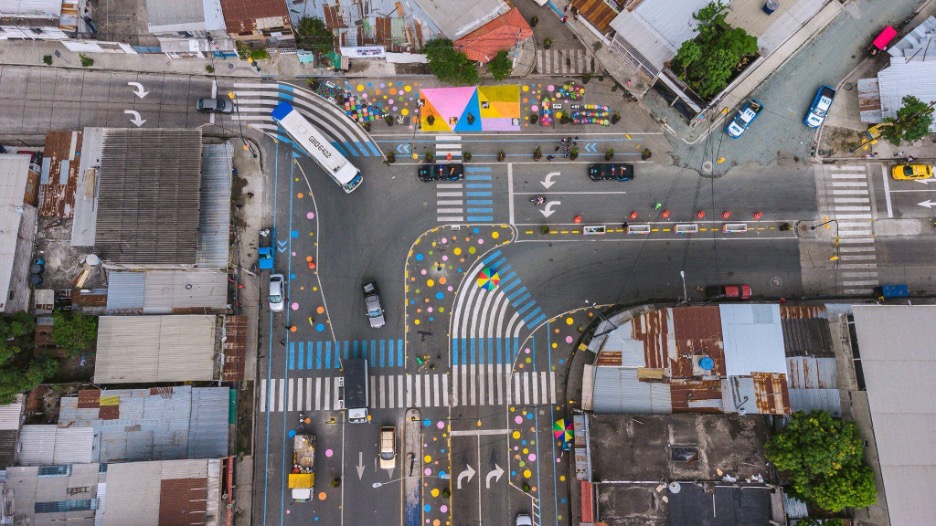
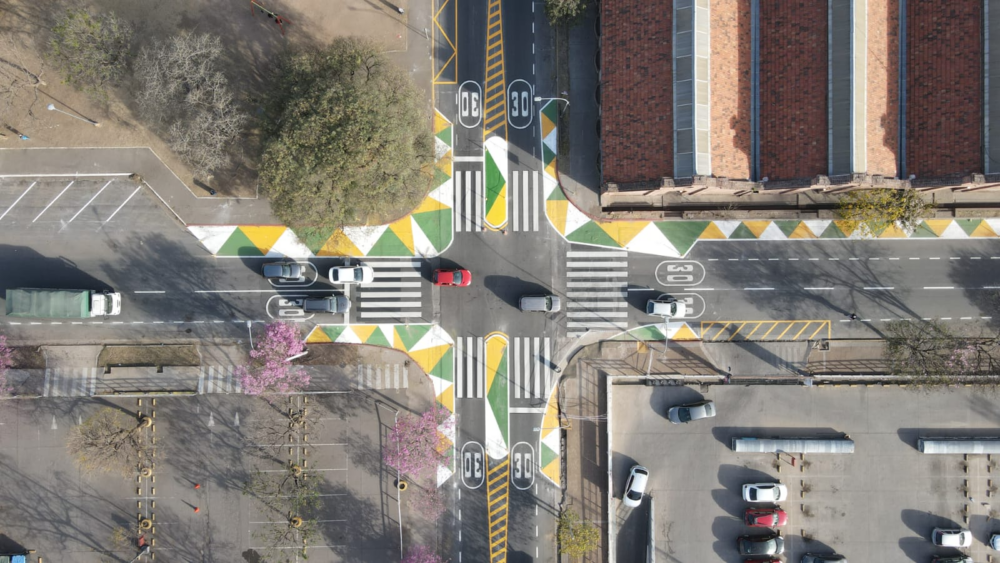
From 2020 to 2025, we strengthened local capacity by training more than 9,700 participants through over 200 workshops. We also supported the engagement, design, evaluation, and delivery of 117 projects, helping cities implement safer street infrastructure. As a result, these projects reduced vehicle speeds by 24–84%.
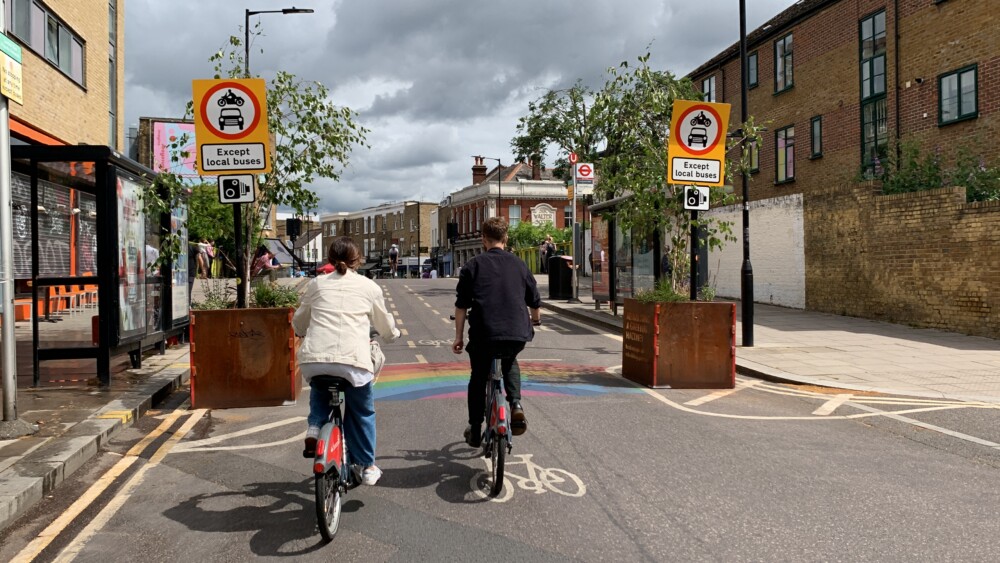
Using the Global Street Design Guide as a main blueprint for this change, the Designing for Safe Speeds guide becomes a celebration of 10 years of efforts and continuous learning. The bold street transformations we see today demonstrate what is possible when we rethink our urban spaces together. By transforming streets that prioritize people, cities aren’t just changing streets—they are saving lives.
Starting March 2026, we’re thrilled to invite leaders, practitioners, community activists, educators, caregivers, and everyone passionate about shaping safer streets to: