In 2022, the Street for Kids program launched its first-ever Leadership Accelerator, bringing 60 city leaders from 20 countries together to develop their skills, expertise, and professional network. After completing the accelerator, GDCI invited the teams to apply for a seed grant of 20,000 USD and year-long technical assistance to implement their vision of creating safe, attractive, and inspiring streets for kids in their cities. In April 2023, ten cities across four continents were selected to bring their visions to life: Abuja, Nigeria; Cuenca, Ecuador; Istanbul, Turkey; Leon, Mexico; Lima, Peru; Lusaka, Zambia; Recife, Brazil; Santiago, Chile; Solo, Indonesia; Tyre, Lebanon.
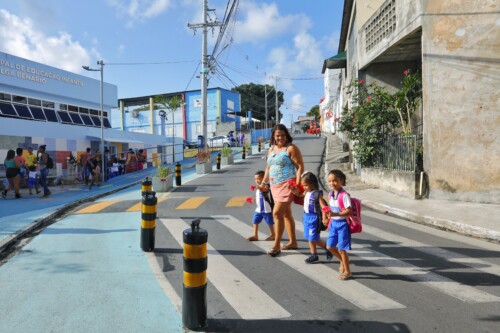
In Cerrillos, Chile, a street between the Pedro Aguirre Cedra school and a newly built plaza in the Buzeta neighborhood presented an opportunity to expand activities for play and physical activity for 350 children. In its previous form, the street was a thoroughfare for cars, buses, and trucks, creating an unsafe and noisy environment for the school community. However, the Buzeta neighborhood is currently undergoing a redevelopment process, and the project is part of an effort to rethink its public spaces, with a special focus on its trees and greenery.
With the support of the Streets for Kids program, a four-month engagement process, focusing on capacity building, involved more than 100 children, 50 city officials, and architecture students from Universidad Mayor. These groups also participated in the design and implementation of the project, reclaiming 820 sqm of street space. In addition to pedestrianizing the street, the project featured playful furniture, vegetation, and vibrant pavement art.
Following the transformation, pedestrian volumes increased fivefold, and caregiving activities doubled. In a post-transformation survey, 100% of respondents reported feeling safer and preferred a fully pedestrianized street.
An unexpected yet positive outcome of the project was the strong advocacy from the school community to make the transformation permanent. More than 100 children, along with staff and families, rallied together to collect signatures and draft a formal letter to the Mayor, urging that the street remain closed to vehicles. Their goal is to ensure the space stays dedicated to walking and play, allowing children to move freely and safely.
Watch the video documenting the Buzeta Caminable project:
To learn more about designing streets for kids in your city, download the Designing Streets for Kids guide, now available in multiple languages, including Spanish.