GDCI and the Bloomberg Initiative for Global Road Safety: A 6-year Status Update
GDCI has been proud to lead and support the design, delivery, and evaluation of safe street infrastructure across 16 cities in 10 countries as a Bloomberg Philanthropies Initiative for Global Road Safety (BIGRS) Partner. The consortium of international partners strives to reduce traffic crash-related fatalities and serious injuries by combining evidence-based best practices in strengthening national legislation; improving data collection and surveillance; changing road user behavior; upgrading vehicle safety; and improving road infrastructure.
As a key infrastructure partner, GDCI partners with cities to build local capacity, implement safer streets, and scale impact through citywide programs and policies. For decades, street designs in too many corners of the world have prioritized cars over people, yet, when designed well, this finite network of space can improve health, resilience, sustainability, well-being, equity–and safety. Worldwide, 1.19 million lives are lost every year to traffic crashes and another 20-50 million people are seriously injured. Tragically, they remain the top killer of young people ages 5-29. All completely preventable.
The most vulnerable–children walking to school, elders ambling to parks, and those with disabilities–benefit greatly from street designs that encourage safer speeds. Speed is the overriding determinant of the likelihood of a crash, of who lives or dies, and of the degree of injury. If struck by a vehicle moving at 30km per hour the odds of survival are 90%. This plummets to 10% at 60km/hr.
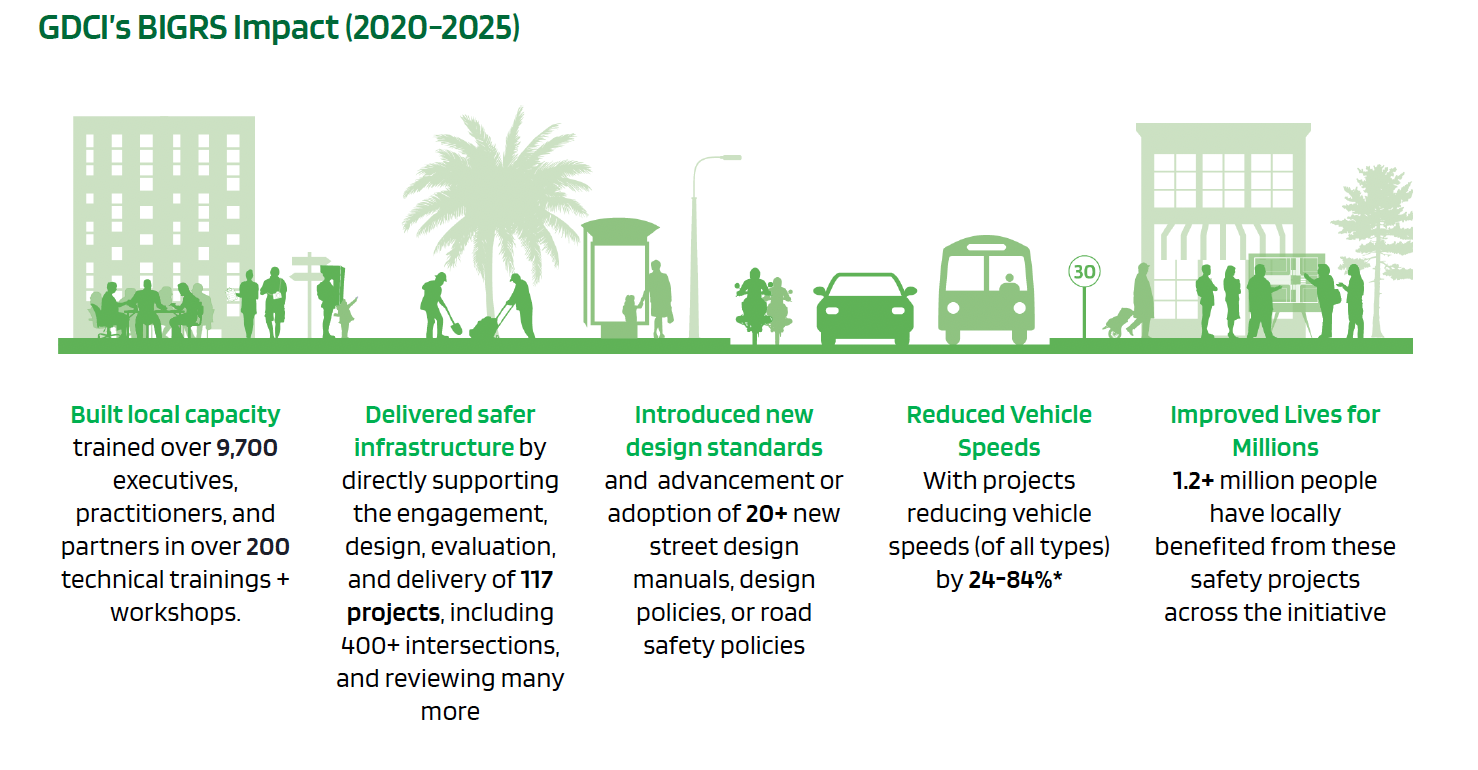
As we look back on six years, we take stock of what our capacity building and tailored technical assistance work achieved, and consider ways to build on these efforts in the coming years. Over this time many of our interim projects have demonstrated the transformative power of good street design, showing what’s possible, and catalyzed permanent implementations and citywide programs. Updated policies and street design manuals are helping cities to sustain these new practices across political administration changes. And presentations, trainings and workshops– reaching almost 10,000 practitioners–are helping to institutionalize improved practices for decades to come.
We have seen initial projects catalyze broader national initiatives in Colombia. By building local capacity, implementing key projects, and updating local guidelines, we are achieving regional impact in Addis Ababa, Hanoi, Cordoba, Quito and Guayaquil. Our work in Brazil has reached an immense scale where we have supported over 45 projects in Recife and Salvador and influenced 50 more through our technical guidance. And at the local level, in Cali, Colombia, we have influenced long term policy change through our contributions to the 2024 to 2036 Speed Management Plan.
Our global team works across our headquarters and partner cities to adapt international principles to unique local contexts and improve the lives of communities. This expertise extends into groundbreaking research that helps advance the entire field of road safety. By partnering with institutions like Curtin University, we helped develop a new methodology to quantify how infrastructure improvements directly save lives. We provide strategic expertise to the World Health Organization’s Global Technical Advisory Group on Motorcycle Safety to ensure our insights inform international standards for safer streets. And we have partnered with cities such as Recife, Guayaquil, and Quito to develop updated Urban Street Design Guidelines.
City-Level Highlights, from Latin America and Africa to Asia
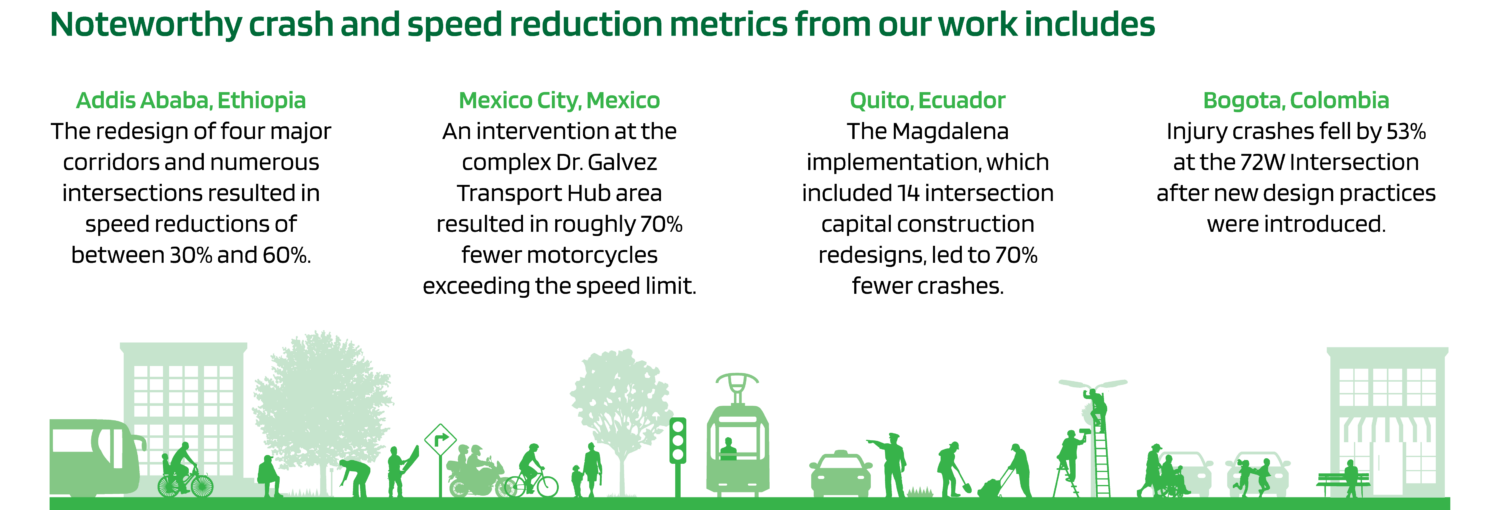
In Cordoba, Argentina, our partnership evolved from early 2023 pilot projects to the creation of the city’s first Street Design Manual in 2025. A notable intervention was the Avenida Colón and Nicolás Avellaneda interim implementation, which led to a 75% reduction in turning speeds. Similarly, speeding decreased by 96% in Salvador, Brazil’s Bonfim neighborhood following road safety improvements.
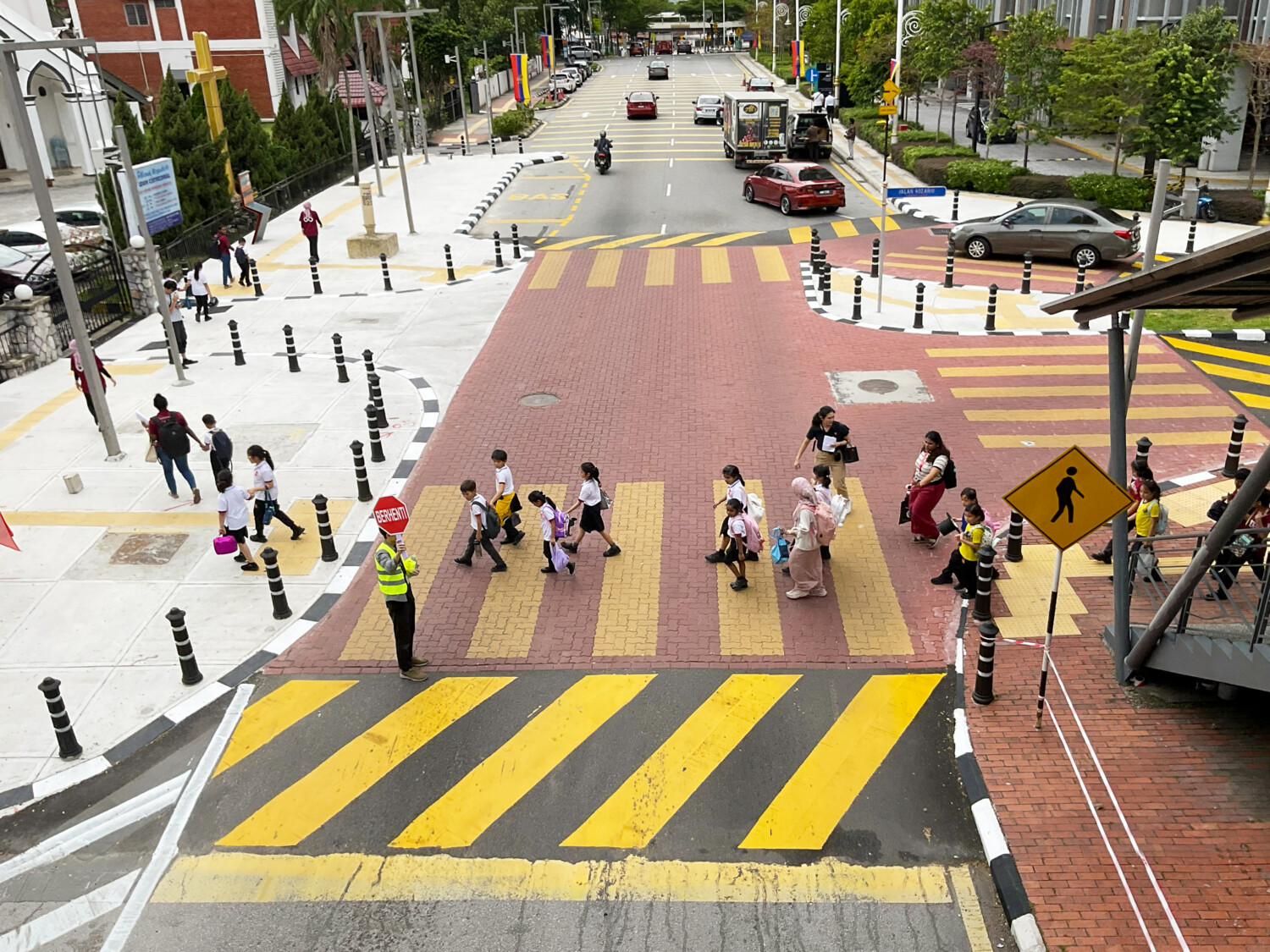
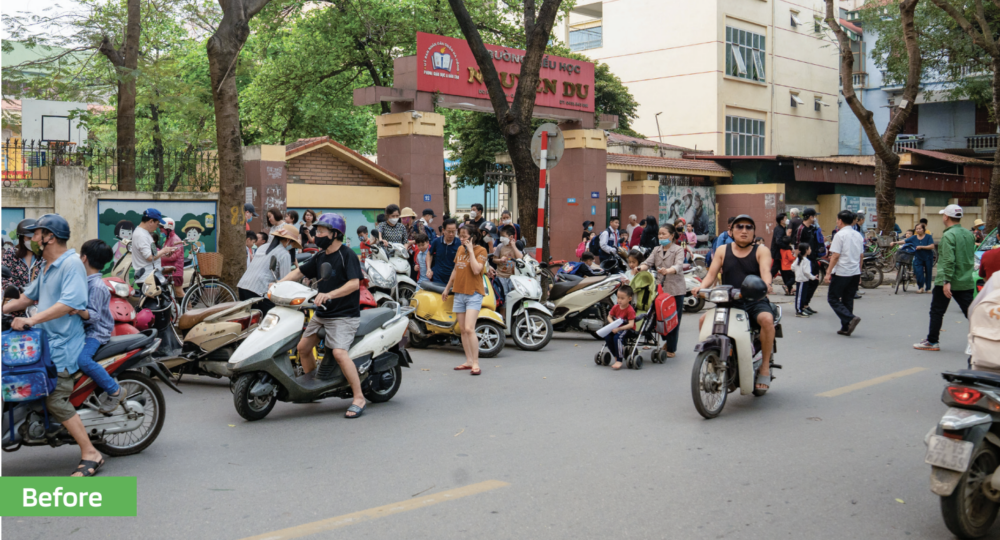
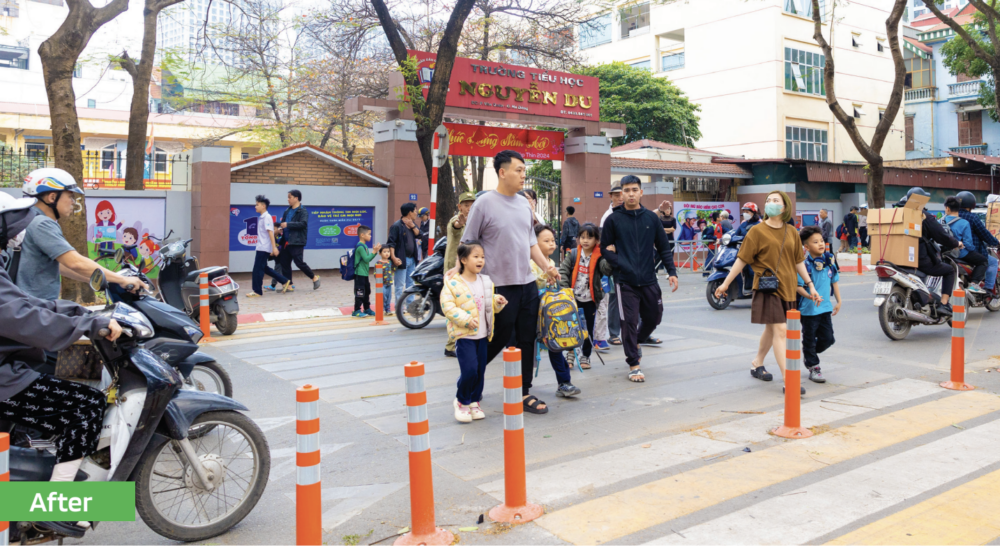
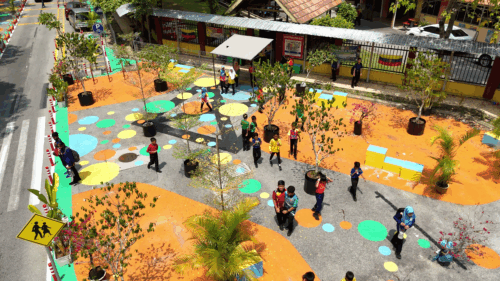
School zones have been a key focus to protect the most vulnerable street users in South Asia. In Hanoi, Vietnam, the success of the Nguyen Du, Xuan Dinh and Sai Son school street pilots is now being scaled to 140 school street interventions across the city. This is supported by a new competition model for deep technical guidance and the development of a Safe Street Design Toolkit. In Kuala Lumpur, Malaysia, the Danau Kota School Street project reduced vehicle speeds by 34% in an area affecting over 2,000 students, earning overwhelming community support. These improvements influenced the development of a 30km per hour school zone policy in Malaysia.
Before and after photographs of the Nguyen Du School Zone
We believe that, if we are asking people to do things differently, to rethink how their streets are designed, that we need to provide the frameworks, evidence, and training to help them know what to do. So, in parallel, we have prioritized building local capacity among engineers, planners, designers, traffic police, and journalists to help 9,700 practitioners be better equipped to plan, design, implement, manage, and talk about safer, healthier, more equitable streets.
In the policy realm, major highlights included the launch of Cali’s (2024–2036) Speed Management Plan which we supported, and our participation in the review of Brazil National Speed Management Plan, led by the National Transportation Agency (SENATRAN). We also participated in the review of Mombasa’s Road Safety Plan. By working with national road authorities like KURA and KeNHA, GDCI aimed to bridge the gap between local Mombasa goals and national agencies, in implementing safe streets in Mombasa.
A Framework for the Future
As we look toward the future of our road safety efforts, we will continue to draw from the lessons of the last six years, helping to deepen local capacity, scale the level of implementation, and amplify the impact of transforming urban streets. We will continue to grow our focus on strategic partnerships and identifying city champions who share our ideals. As we move forward, we will strive towards a future where every street, in every city, is designed to protect the lives of all who use it. We hope you will join us on this journey.
Sign up for our newsletter to receive GDCI updates
In the heart of Setapak, Kuala Lumpur, where speeding vehicles and pedestrian movement intertwine daily, SK Danau Kota 2 has become the focal point of a transformative initiative aimed to make school streets safer for students to walk and cycle. This project was backed by the Bloomberg Initiative for Global Road Safety (BIGRS), a program that has committed to address rising concerns over road traffic deaths and support road safety interventions in cities worldwide.
Scaling up Streets for Kids: Highlights from the 2025 Streets for Kids Leadership Accelerator
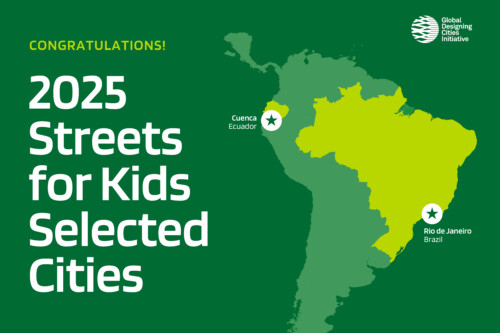
In 2025, GDCI brought together a selected group of 10 city teams working to scale up their efforts to create more and better Streets for Kids in Brazil, Colombia, and Ecuador through multiple projects, programs, and policies. Here’s a look back and key learnings from a two-month online capacity-building program.